Also known as: Normal QRS Axis, Normal Electrical Axis, Normoaxis
Axis Properties
| Normal Range | -30° to +90° (human); +40° to +100° (canine); +0° to +160° (feline) |
ECG Criteria
- Positive QRS deflection in lead I (left-directed forces dominate)
- Positive QRS deflection in lead aVF (inferior-directed forces dominate)
- Lead II shows tallest positive QRS (most parallel to mean axis)
- aVR is predominantly negative
- Isoelectric lead (equiphasic) falls perpendicular to the mean axis
Causes
- Normal ventricular mass and geometry
- Intact interventricular conduction system
- Balanced left and right ventricular forces
- Normal body habitus
- Physiologic variation with age (neonates trend rightward, elderly trend leftward)
Clinical Significance
A normal cardiac axis indicates balanced ventricular depolarization with no significant structural or conduction abnormality. It is the expected finding in healthy patients and serves as the reference standard against which axis deviations are judged.
Species Variation
| Human (adult) | -30° to +90° |
| Human (neonate) | +90° to +180° (physiologic right axis) |
| Canine | +40° to +100° |
| Feline | 0° to +160° |
Frequently Asked Questions
What is the normal cardiac axis range in humans?
In adult humans, the normal cardiac axis falls between -30° and +90°. This range reflects the predominant leftward and inferiorly directed ventricular forces produced by the anatomically larger left ventricle. Values more negative than -30° constitute left axis deviation; values beyond +90° constitute right axis deviation.
How do I quickly estimate the cardiac axis on a 12-lead ECG?
The fastest bedside method uses leads I and aVF. If both are positive, the axis is in the normal inferior-left quadrant (0° to +90°). If lead I is positive and aVF is negative, suspect left axis deviation (-30° to -90° range). If lead I is negative and aVF is positive, suspect right axis deviation. For precision, identify the isoelectric (most equiphasic) lead — the mean axis is perpendicular to that lead, in the direction of the more positive deflection.
Why does the normal axis differ between humans and dogs?
In dogs, the normal QRS axis is +40° to +100°, shifted somewhat rightward compared to humans (-30° to +90°). This difference reflects canine cardiac anatomy: the right ventricle has a relatively larger mass relative to the left ventricle in dogs, and the cardiac apex points more caudally and slightly to the right. Species-specific normal ranges must always be applied when interpreting veterinary ECGs to avoid over-calling axis deviation.
Can a normal cardiac axis be present with significant heart disease?
Yes. Many serious conditions — including coronary artery disease, cardiomyopathy, and even certain conduction abnormalities — may present with a normal axis, particularly in early stages or when opposing forces cancel out. A normal axis is reassuring but never excludes pathology. Clinical context, other ECG findings, and imaging must be integrated.
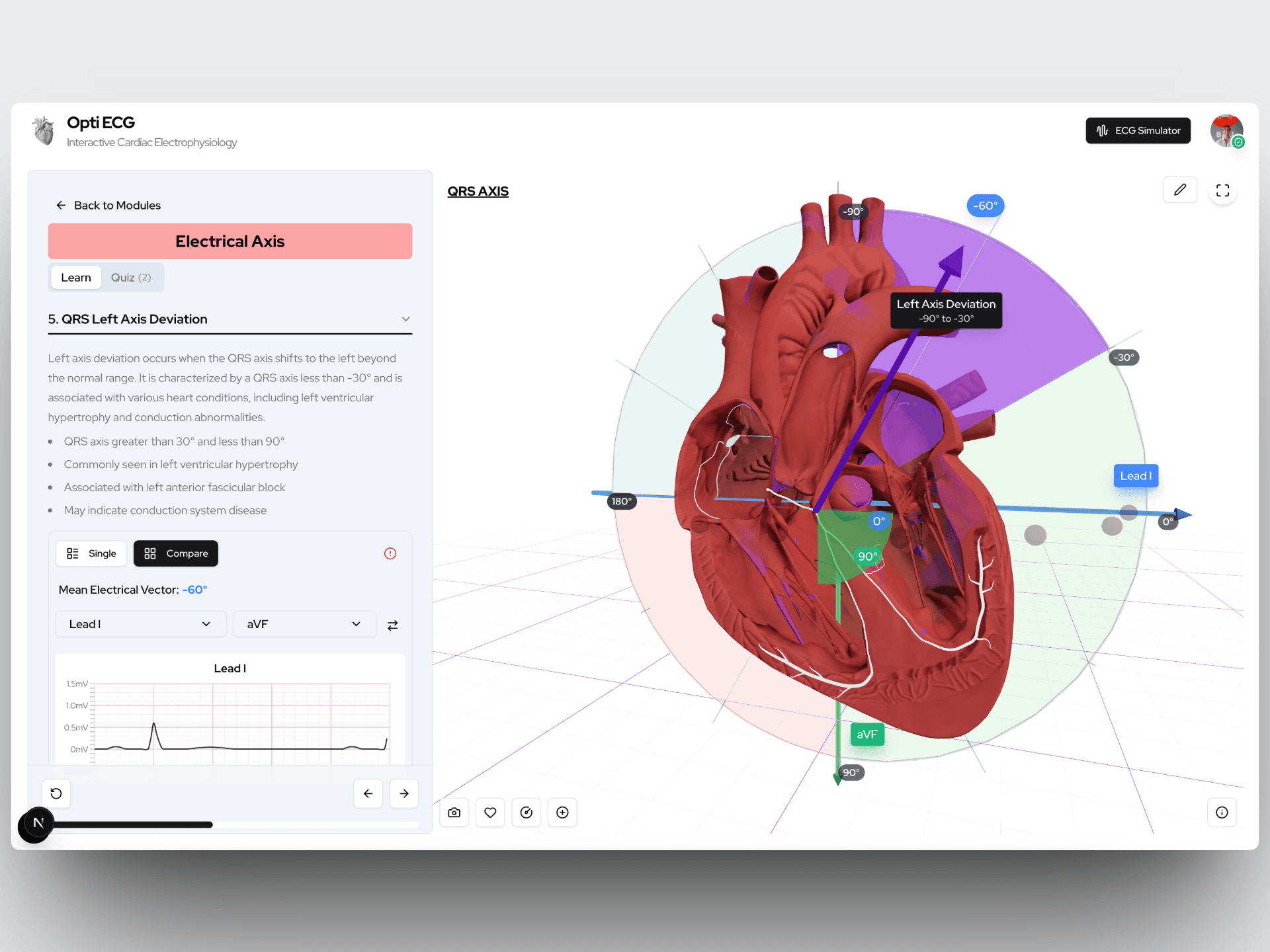
See Normal Cardiac Axis in 3D
Explore ECG rhythms interactively with our simulator and 3D heart visualization synced beat-for-beat. See how electrical activity produces every wave on the tracing.
Related Topics
How helpful was this page?