Also known as: LVH, Left Ventricular Enlargement, LV Hypertrophy
Axis Properties
| Normal Range | Cardiac axis in LVH: typically -30° to 0° (mild leftward shift; frank LAD less common) |
| Deviation Direction | Mild leftward and superior shift; frank left axis deviation in severe cases |
ECG Criteria
- Sokolow-Lyon criteria: S in V1 + R in V5 or V6 ≥ 35 mm (adults >35 years)
- Cornell voltage criteria: R in aVL + S in V3 > 28 mm (men) or > 20 mm (women)
- R wave in aVL ≥ 11 mm (high specificity)
- LV strain pattern: ST depression and asymmetric T-wave inversion in lateral leads (I, aVL, V5, V6)
- Left atrial abnormality (P-wave notching in lead II, biphasic P in V1)
- Mild to moderate left axis deviation (-15° to -30°)
- Prolonged QRS duration (up to 110 ms without frank BBB)
Causes
- Systemic hypertension (most common cause worldwide)
- Aortic stenosis (severe pressure overload)
- Hypertrophic cardiomyopathy (HCM)
- Coarctation of the aorta
- Aortic regurgitation (volume and pressure overload)
- Mitral regurgitation (chronic volume overload)
- Athletic heart syndrome (physiologic LVH in trained athletes)
- Chronic kidney disease with hypertension
Clinical Significance
LVH detected on ECG is an independent risk factor for cardiovascular morbidity and mortality, including myocardial infarction, heart failure, stroke, and sudden cardiac death. ECG LVH with strain pattern (ST-T changes) carries a significantly worse prognosis than voltage criteria alone. Echocardiography is the gold standard for LVH diagnosis, but ECG remains an important screening and risk stratification tool.
Species Variation
| Canine | LVH in dogs: increased R-wave amplitude in leads II and aVF (>3.0 mV in large breeds); left axis deviation uncommon but possible |
| Feline | LVH in cats: common cause is HCM; increased R-wave amplitude and left axis deviation; echocardiography preferred over ECG for diagnosis |
Frequently Asked Questions
What are the most commonly used ECG criteria for left ventricular hypertrophy?
The two most widely used criteria are: (1) Sokolow-Lyon — S wave in V1 plus R wave in V5 or V6 ≥ 35 mm in adults older than 35 years; and (2) Cornell voltage — R wave in aVL plus S wave in V3 greater than 28 mm in men or 20 mm in women. The Cornell criteria have better sensitivity in women. An R wave in aVL ≥ 11 mm is a high-specificity single-lead criterion useful at the bedside. No single criterion is both highly sensitive and specific; sensitivity is approximately 30–50% with specificity above 85–90%.
What is the LVH strain pattern and what does it indicate?
The LV strain pattern refers to ST-segment depression with asymmetric T-wave inversion in the lateral leads (I, aVL, V5, V6). It is called 'strain' because historically it was attributed to subendocardial ischemia from increased wall stress. Modern understanding recognizes it reflects repolarization abnormality from myocyte hypertrophy and fibrosis. Its presence in a patient with LVH voltage criteria significantly worsens prognosis and indicates more advanced hypertrophy than voltage alone.
Does LVH cause left axis deviation?
LVH typically causes a mild leftward shift in the cardiac axis, often into the range of -15° to -30°, but frank left axis deviation (beyond -30°) is less common from LVH alone. When significant LAD accompanies LVH, it often indicates concurrent left anterior fascicular block, which is a common companion of advanced hypertension-related conduction disease. The two conditions frequently coexist.
How reliable is the ECG for diagnosing LVH?
ECG has significant limitations for LVH diagnosis: sensitivity is only 30–60% depending on the criteria used, meaning up to 40–70% of patients with true echocardiographic LVH have a negative ECG. Factors that reduce ECG sensitivity include obesity (attenuates signal), chronic lung disease, pericardial effusion, and female sex. Echocardiography is the gold standard. A positive ECG for LVH has high specificity (~90%) but a negative ECG does not rule out LVH in high-risk patients.
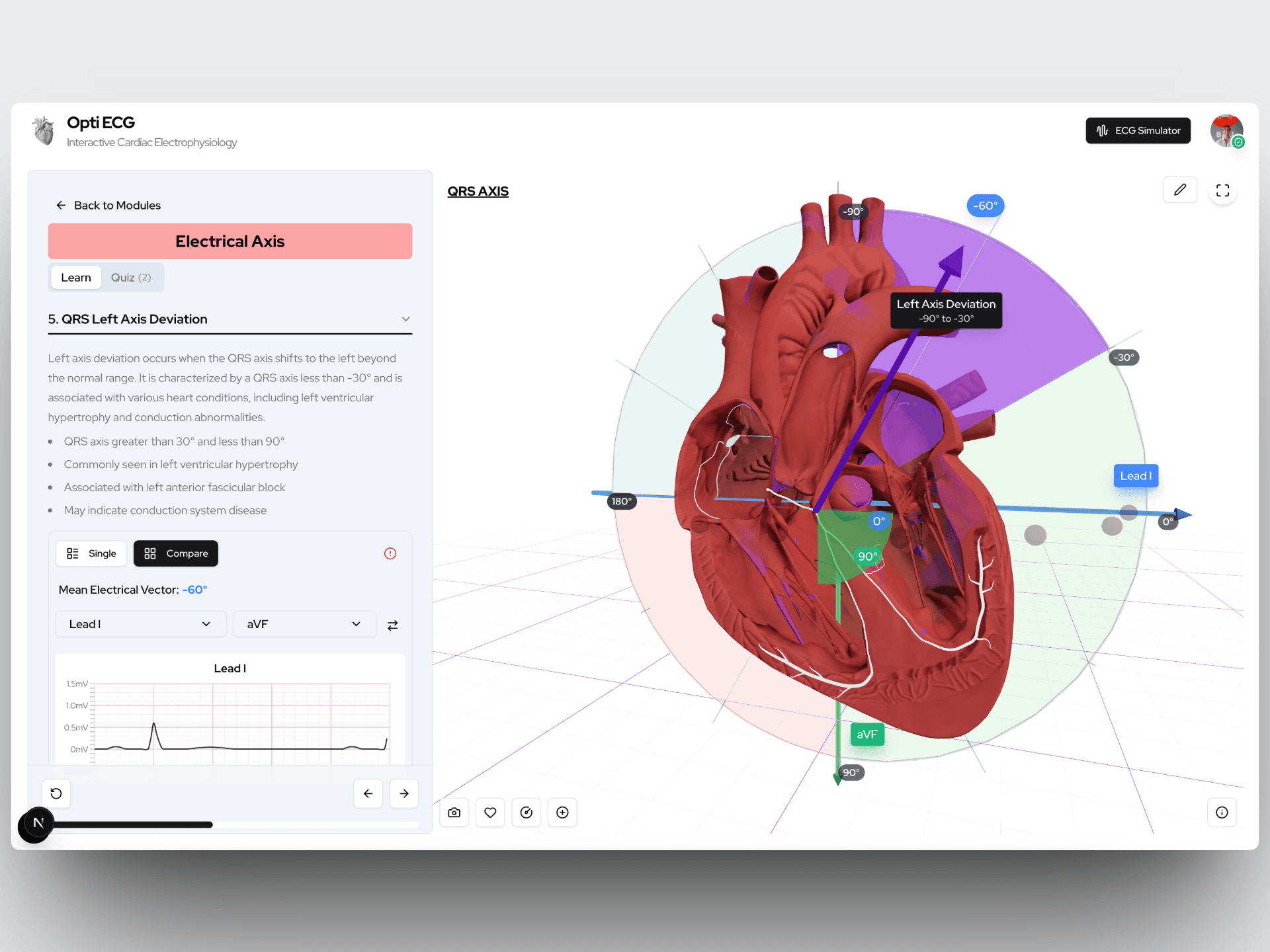
See Left Ventricular Hypertrophy in 3D
Explore ECG rhythms interactively with our simulator and 3D heart visualization synced beat-for-beat. See how electrical activity produces every wave on the tracing.
Related Topics
How helpful was this page?