Also known as: Veterinary QRS Axis, Canine Cardiac Axis, Feline Cardiac Axis, Animal ECG Axis
Axis Properties
| Normal Range | Canine: +40° to +100°; Feline: 0° to +160°; human reference: -30° to +90° |
ECG Criteria
- Apply species-specific normal ranges before classifying any axis as deviated
- Canine: lead II R wave is the primary diagnostic lead; normal R wave amplitude varies by breed and body size
- Canine RAD: deep S waves in leads I, II, III (SI-SII-SIII pattern) — classic for RVH from heartworm or pulmonic stenosis
- Feline LAD: common with hypertrophic cardiomyopathy — left anterior fascicular block in cats produces marked LAD
- Canine standard ECG: often recorded in right lateral recumbency with limb leads only; 6-lead system typical
- Body position affects recorded axis: right lateral vs. left lateral vs. standing position shifts apparent axis
Causes
- Canine left axis deviation (<+40°): left anterior fascicular block, severe LVH, inferior MI (uncommon in dogs)
- Canine right axis deviation (>+100°): right ventricular hypertrophy, heartworm disease (dirofilariasis), pulmonic stenosis, pulmonary hypertension
- Feline left axis deviation (<0°): left anterior fascicular block (common finding in cats with HCM), severe LVH
- Feline right axis deviation (>+160°): RVH, pulmonary hypertension, congenital disease
- Dextrocardia: produces mirror-image axis in any species
Clinical Significance
Veterinary ECG axis interpretation has important clinical applications. Right axis deviation in dogs strongly suggests heartworm disease or congenital right heart disease and should prompt Dirofilaria immitis antigen testing and echocardiography. Left axis deviation in cats with a wide or notched QRS should raise suspicion for hypertrophic cardiomyopathy with left anterior fascicular block. Species-specific normal ranges must be applied rigorously — the wide feline normal range (0° to +160°) means that many findings that would be abnormal in humans are physiologic in cats.
Species Variation
| Canine (dog) | +40° to +100°; breed variation exists (giant breeds may trend more rightward) |
| Feline (cat) | 0° to +160°; wide range; left anterior fascicular block is a common pathologic finding |
| Equine (horse) | +0° to +90° approximately; large body size requires limb lead adjustments |
| Bovine (cow) | Variable; ECG less standardized than companion animals |
Frequently Asked Questions
What is the normal cardiac axis range for dogs?
The normal cardiac axis in dogs is +40° to +100°. This is shifted rightward compared to the human normal (-30° to +90°) because canine cardiac anatomy places the apex more cranially and slightly to the right, and the right ventricle has relatively greater mass compared to humans. Breed variation exists: some large and giant breeds may have axes up to +120° and still be normal, but values beyond this threshold should prompt investigation for right ventricular disease.
Why is left anterior fascicular block so common in cats with HCM?
Hypertrophic cardiomyopathy (HCM) in cats causes significant septal and left ventricular free wall hypertrophy. The left anterior fascicle of the left bundle branch is particularly vulnerable to compression and ischemia in HCM because it courses through the interventricular septum and subendocardial regions that are first affected by hypertrophy-related ischemia and fibrosis. LAFB produces marked left axis deviation in cats — often -60° to -90° — and is one of the most common ECG abnormalities in feline HCM, occurring in approximately 20–30% of affected cats.
How does heartworm disease cause right axis deviation in dogs?
Dirofilaria immitis adult worms reside in the pulmonary arteries and right heart. They cause mechanical obstruction, thromboembolism, and vascular inflammation that progressively elevates pulmonary artery pressure. Chronic pulmonary hypertension leads to right ventricular pressure overload and hypertrophy. As the right ventricle hypertrophies, its electrical forces increase and shift the mean QRS axis rightward beyond +100°. Severely affected dogs may develop the SI-SII-SIII pattern (deep S waves in all three standard leads) as a hallmark of right ventricular hypertrophy.
Does body position during ECG recording affect the measured axis in animals?
Yes, significantly. In veterinary ECG, patient positioning has a measurable effect on the recorded frontal plane axis. Dogs recorded in right lateral recumbency versus left lateral recumbency can show axis shifts of 10–30°. Standard veterinary ECG guidelines recommend consistent right lateral recumbency for limb lead recordings to ensure reproducibility. When comparing serial ECGs in an animal, the same body position should always be used. This positional effect is less pronounced in humans due to standardized supine recording with limb leads.
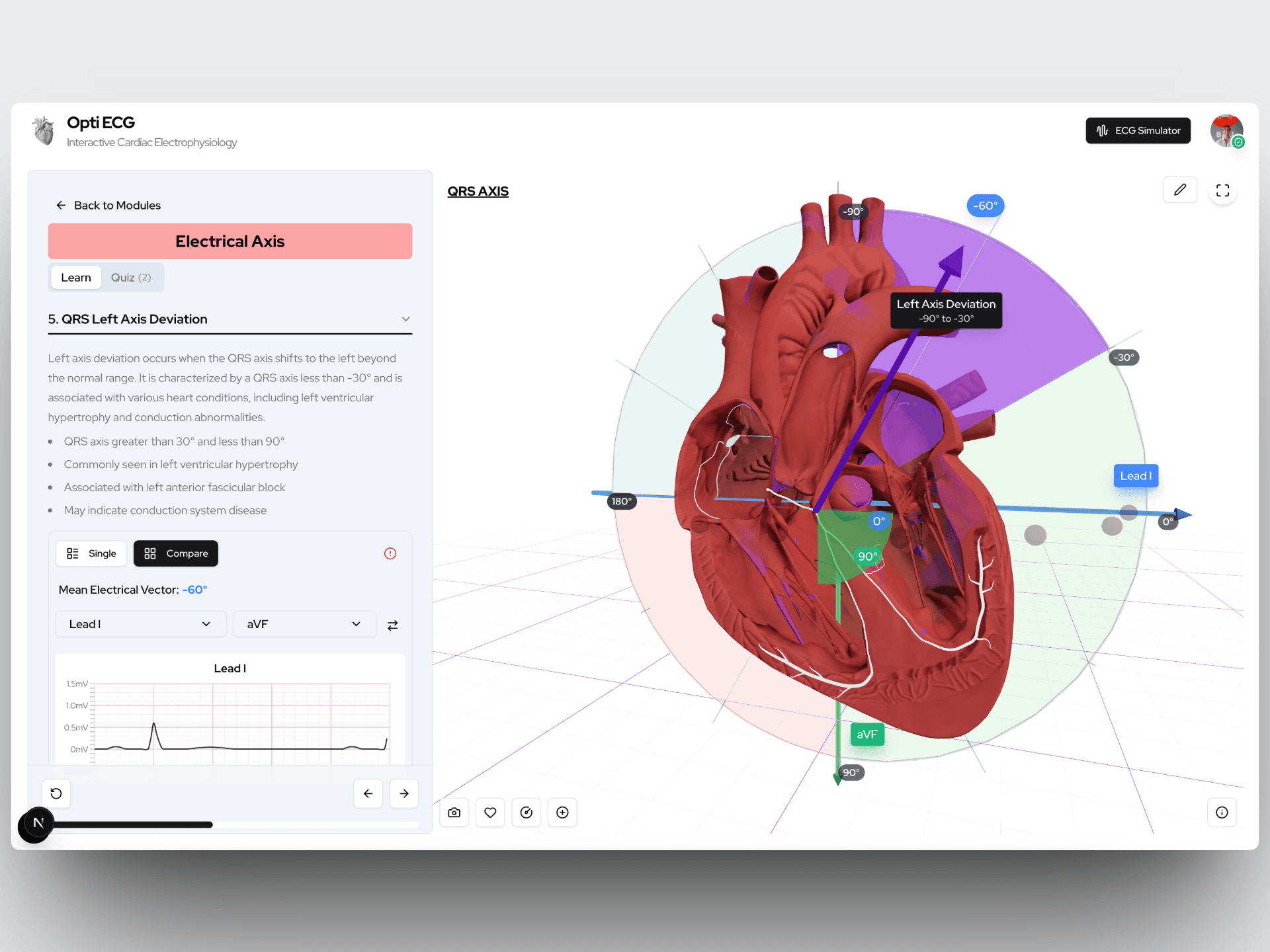
See Cardiac Axis in Veterinary ECG in 3D
Explore ECG rhythms interactively with our simulator and 3D heart visualization synced beat-for-beat. See how electrical activity produces every wave on the tracing.
Related Topics
How helpful was this page?