Also known as: RVH, Right Ventricular Enlargement, RV Hypertrophy
Axis Properties
| Normal Range | Cardiac axis in RVH: typically +90° to +180° (right axis deviation is a hallmark finding) |
| Deviation Direction | Rightward (axis +90° to +180°); right axis deviation is a defining ECG feature of RVH |
ECG Criteria
- Right axis deviation: QRS axis more positive than +90° (often +110° to +180°)
- Dominant R wave in V1 (R/S ratio > 1 in V1 in adults)
- Tall R wave in V1 ≥ 7 mm or R/S ratio in V1 > 1
- Deep S wave in V5-V6 (S/R ratio > 1 in V5 or V6)
- Right ventricular strain pattern: ST depression and T-wave inversion in V1-V3
- Right atrial enlargement: peaked P waves in lead II > 2.5 mm height ('P pulmonale')
- Incomplete or complete right bundle branch block may accompany RVH
- qR pattern in V1 (in severe pressure overload)
Causes
- Pulmonary arterial hypertension (idiopathic or secondary)
- Chronic thromboembolic pulmonary hypertension (CTEPH)
- Congenital heart disease (pulmonic stenosis, tetralogy of Fallot, Eisenmenger syndrome)
- Cor pulmonale from chronic lung disease (COPD, pulmonary fibrosis)
- Mitral stenosis with secondary pulmonary hypertension
- Dirofilariasis (heartworm disease) in dogs — major veterinary cause
- Tricuspid regurgitation with volume overload
- Atrial septal defect (volume overload of RV)
Clinical Significance
RVH on ECG indicates significant right-sided pressure or volume overload and warrants urgent evaluation. The right ventricle is a thin-walled, low-pressure chamber; it hypertrophies only under chronic stress. The presence of RVH with right ventricular strain pattern is associated with elevated pulmonary vascular resistance and increased risk of right heart failure. RVH with right atrial enlargement (biatrial enlargement pattern) suggests biventricular disease.
Species Variation
| Canine | RVH in dogs: axis more positive than +100°; tall R wave in aVR and V2; S waves deep in I, II, III; heartworm disease is a major cause |
| Feline | RVH in cats: axis more positive than +160°; dominant S waves in left precordial leads; uncommon compared to LVH |
Frequently Asked Questions
What ECG finding best distinguishes RVH from a right bundle branch block?
Both RVH and right bundle branch block (RBBB) can produce a dominant R wave in V1. The key distinguishing features are: RBBB produces a wide QRS (≥120 ms) with an rSR' or rsR' pattern in V1 and wide, slurred S waves in leads I and V6. RVH produces a narrow (or mildly widened) QRS with a dominant monophasic R wave in V1, right axis deviation, and a right ventricular strain pattern (ST/T changes in V1-V3). RBBB can coexist with RVH, making differentiation more challenging.
How sensitive and specific is the ECG for diagnosing right ventricular hypertrophy?
The ECG has poor sensitivity (~25–40%) but good specificity (~85–90%) for echocardiographically confirmed RVH. The low sensitivity means many patients with significant RVH will have a normal or non-diagnostic ECG. This is partly because the right ventricle must enlarge substantially before overcoming normal left ventricular electrical dominance. Echocardiography and cardiac MRI are far more sensitive. The ECG is most useful when positive, as it suggests advanced disease.
What is the P pulmonale pattern and how does it relate to RVH?
P pulmonale refers to tall, peaked P waves (>2.5 mm) in lead II, reflecting right atrial enlargement. It is commonly seen alongside RVH because the conditions that cause right ventricular pressure overload (e.g., pulmonary hypertension, COPD) also chronically elevate right atrial pressures and cause right atrial dilation. Its presence in combination with right axis deviation and dominant V1 R wave strongly supports RVH from pulmonary disease.
Is right ventricular hypertrophy commonly detected in veterinary patients?
Yes, particularly in dogs. Dirofilariasis (heartworm disease) is a major cause of right ventricular hypertrophy in canine patients in endemic regions. Affected dogs develop pulmonary hypertension from vascular obstruction by adult heartworms, leading to RVH with right axis deviation and right atrial enlargement. ECG and echocardiography are used together for diagnosis and monitoring. In cats, RVH is less common than left ventricular hypertrophy.
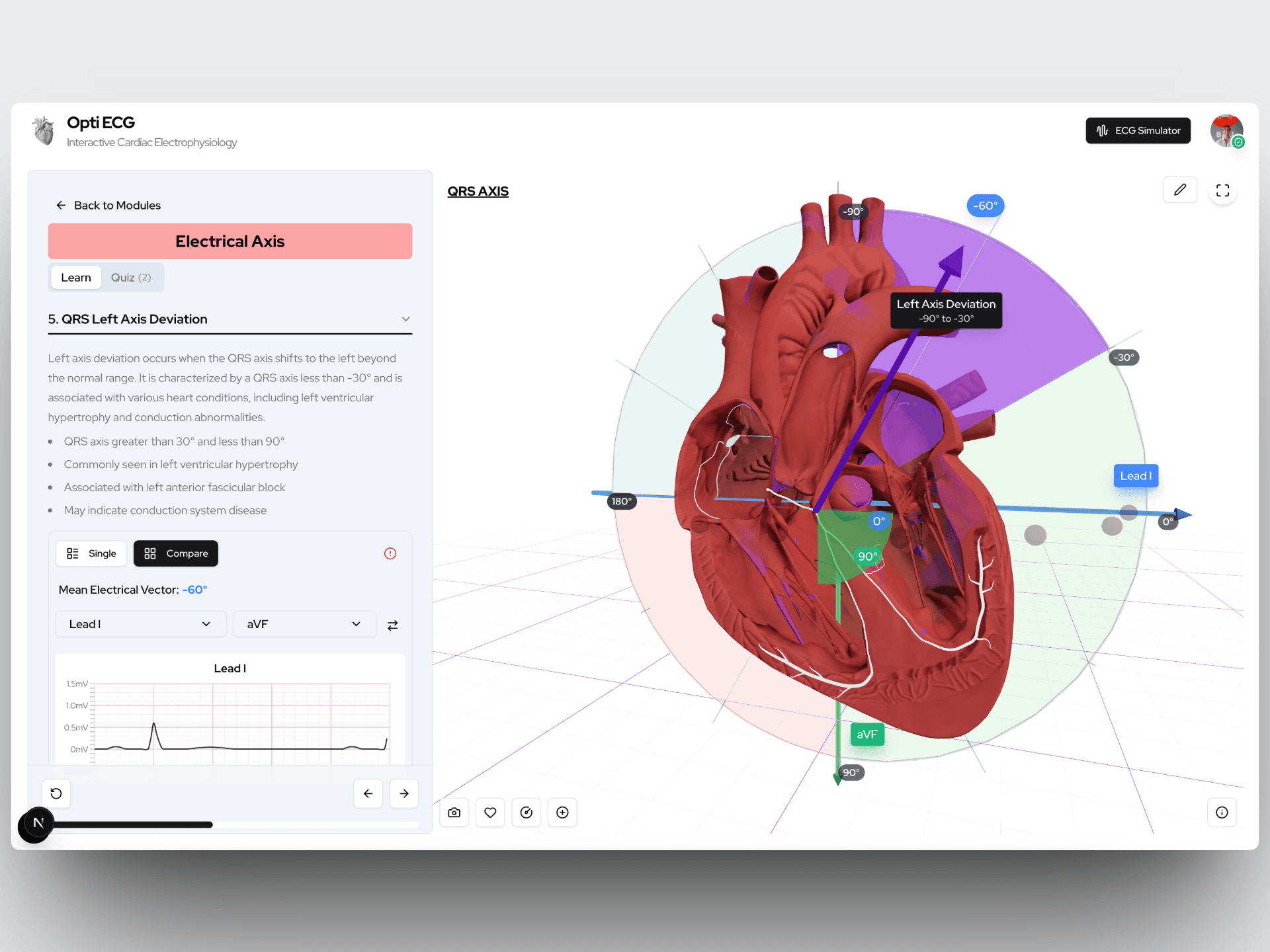
See Right Ventricular Hypertrophy in 3D
Explore ECG rhythms interactively with our simulator and 3D heart visualization synced beat-for-beat. See how electrical activity produces every wave on the tracing.
Related Topics
How helpful was this page?