Also known as: Dog Normal Sinus Rhythm, Canine NSR, Normal Canine Cardiac Rhythm
| Topic Type | Rhythm |
| Species | canine |
Key Differences from Human ECG
- Heart rate range is broader than in humans: 60–140 bpm for large breeds, up to 180 bpm for small breeds
- Respiratory sinus arrhythmia (RSA) — cyclical rate variation with breathing — is expected and normal, not a separate rhythm diagnosis
- A wandering atrial pacemaker (gradual P wave morphology changes without a rate change) is a normal variant in dogs with strong vagal tone
- Mean electrical axis +40° to +100° reflects the more rightward orientation of the canine heart compared to humans
- P wave duration should be ≤0.04 seconds in cats and ≤0.05 seconds in dogs; notching may be a normal variant in dogs
- QRS duration in dogs is normally <0.06 seconds in small breeds and <0.08 seconds in large breeds
Clinical Pearls
- A normal canine sinus rhythm may look irregular due to RSA — confirm by observing that the rate change correlates with the respiratory cycle before labeling it an arrhythmia
- PR interval in dogs is normally 0.06–0.13 seconds; a PR >0.13 seconds in a large breed dog at a normal rate suggests first-degree AV block
- The QT interval in dogs should be assessed with rate correction; QTc >0.25 seconds warrants investigation for electrolyte abnormalities or drug effects
- In large breed dogs at rest with sinus rates below 60 bpm and no RSA, consider hypothyroidism, hyperkalemia, or elevated intracranial pressure as causes
- Sinus tachycardia (>180 bpm in small breeds, >160 bpm in large breeds at rest) is always secondary — search for pain, fever, anemia, hypovolemia, hyperthyroidism, or congestive heart failure
Frequently Asked Questions
What does normal sinus rhythm look like on a canine ECG?
On a canine ECG, normal sinus rhythm shows upright, uniform P waves in lead II preceding each QRS complex, a consistent PR interval of 0.06–0.13 seconds, narrow QRS complexes (less than 0.06 seconds in small breeds, less than 0.08 seconds in large breeds), and a rate within the species- and size-appropriate range. The rhythm may vary cyclically with respiration (RSA), which is normal. Each P wave should be followed by one QRS complex.
Is sinus arrhythmia in dogs normal?
Yes. Respiratory sinus arrhythmia is a hallmark of normal canine cardiac physiology. The heart rate increases during inspiration and slows during expiration due to cyclical changes in vagal tone. This produces an irregular rhythm on ECG that can look striking to those accustomed to human ECGs. RSA is so expected in dogs that its absence in a calm, resting patient may indicate elevated sympathetic tone, pain, cardiac disease, or conditions suppressing normal vagal modulation.
What is a wandering atrial pacemaker in dogs and is it normal?
A wandering atrial pacemaker is a rhythm where the site of impulse origin shifts gradually within the atria, causing the P wave morphology to change progressively from beat to beat (upright, flattened, notched) without a sudden change in rate. In dogs, this is generally considered a normal variant associated with high vagal tone, particularly in brachycephalic breeds and athletic dogs. It should not be confused with multifocal atrial tachycardia, which involves an abnormally rapid rate and abrupt P wave changes.
What is the normal PR interval for dogs on ECG?
The normal PR interval in dogs is 0.06–0.13 seconds (60–130 ms). It tends to be shorter at faster heart rates and slightly longer in large breed dogs with low resting rates. A PR interval consistently exceeding 0.13 seconds at a normal heart rate indicates first-degree AV block. A PR interval shorter than 0.06 seconds may suggest a pre-excitation syndrome such as WPW or an accelerated junctional rhythm, warranting further evaluation.
How does rate-related RSA differ from true sinus arrhythmia pathology?
Normal respiratory sinus arrhythmia in dogs is smooth, cyclical, and clearly linked to the breathing pattern — the R-R intervals shorten and lengthen in a predictable waxing-and-waning pattern corresponding to inspiration and expiration respectively. The variation resolves or markedly diminishes with exercise or excitement. Pathological sinus node dysfunction, by contrast, produces irregular or abrupt pauses that do not correlate neatly with respiration, may be accompanied by escape beats, and often persist at higher heart rates.
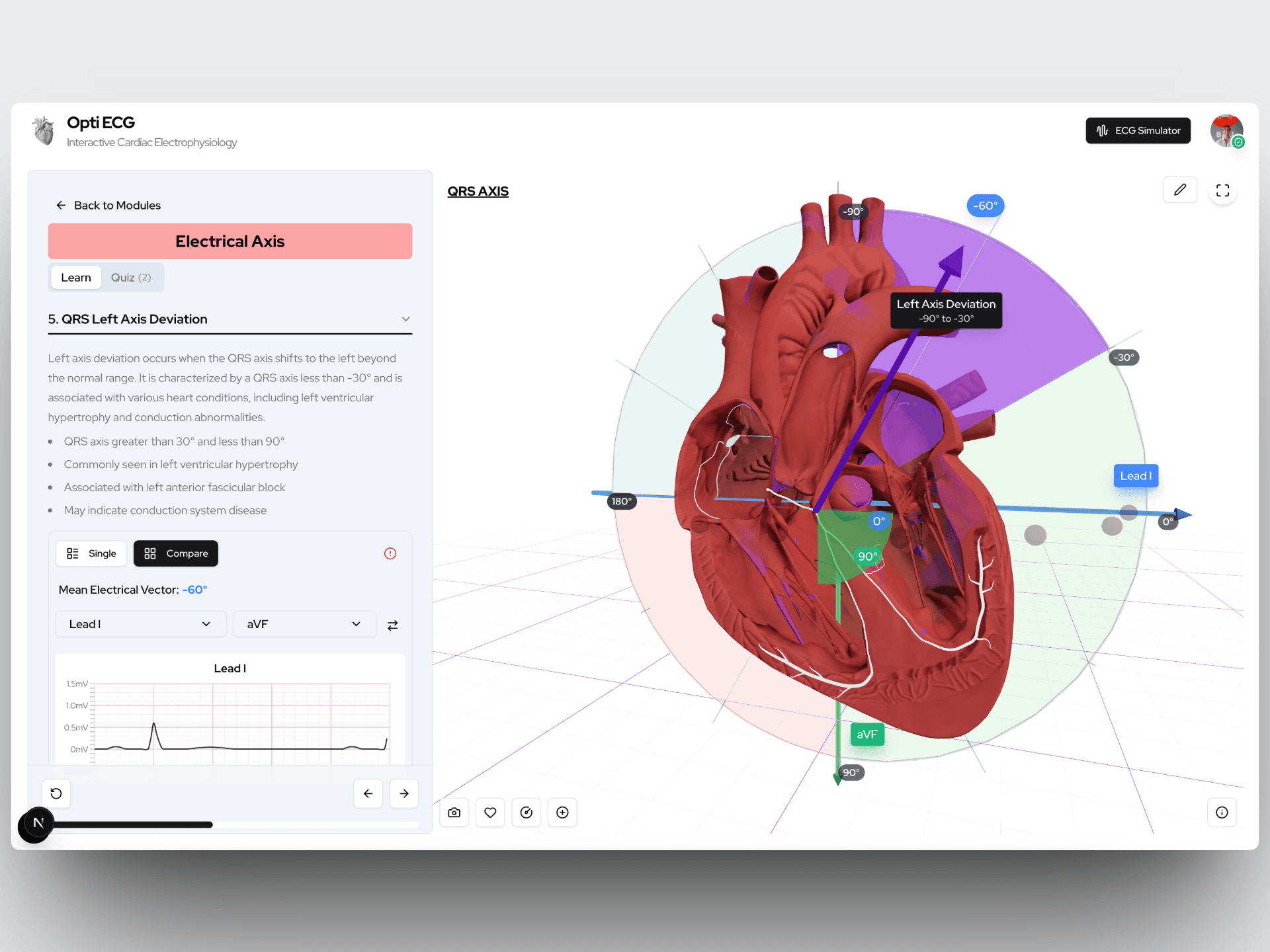
See Canine Normal Sinus Rhythm in 3D
Explore ECG rhythms interactively with our simulator and 3D heart visualization synced beat-for-beat. See how electrical activity produces every wave on the tracing.
Related Topics
How helpful was this page?