Also known as: NSR, Regular Sinus Rhythm
ECG Characteristics
| Heart Rate | 60-100 bpm (human), 60-160 bpm (canine, varies by breed size) |
| Rhythm | Regular |
| P Wave | Upright in leads I, II, aVF; one P wave before each QRS |
| PR Interval | 0.12–0.20 seconds |
| QRS Duration | < 0.12 seconds |
Mechanism
Impulse originates in the SA node and conducts through the AV node, Bundle of His, and Purkinje fibers in a normal sequence.
Key Features on ECG
- Regular R-R intervals
- Upright P waves in lead II
- Consistent PR interval (0.12–0.20s)
- Narrow QRS complex (< 0.12s)
- One P wave preceding each QRS complex
Causes
- Normal physiological state
- Adequate autonomic tone
- Healthy conduction system
Clinical Significance
NSR is the expected baseline rhythm. Its presence indicates normal impulse generation and conduction. Deviations from NSR require investigation.
Frequently Asked Questions
What defines normal sinus rhythm on ECG?
Normal sinus rhythm is defined by a regular rate between 60–100 bpm (in humans), upright P waves in lead II preceding each QRS complex, a consistent PR interval of 0.12–0.20 seconds, and a narrow QRS duration under 0.12 seconds.
What is the normal sinus rhythm rate for dogs?
In dogs, normal sinus rhythm rate varies significantly by breed size: large and giant breeds typically range from 60-100 bpm, medium breeds from 70-120 bpm, and small or toy breeds from 80-160 bpm. Puppies may have heart rates up to 220 bpm.
How does normal sinus rhythm differ from sinus arrhythmia?
Both originate from the SA node, but sinus arrhythmia has slight R-R interval variation that correlates with the respiratory cycle — the heart rate increases with inspiration and decreases with expiration. This is a normal finding, especially in young individuals and dogs.
See Normal Sinus Rhythm in 3D
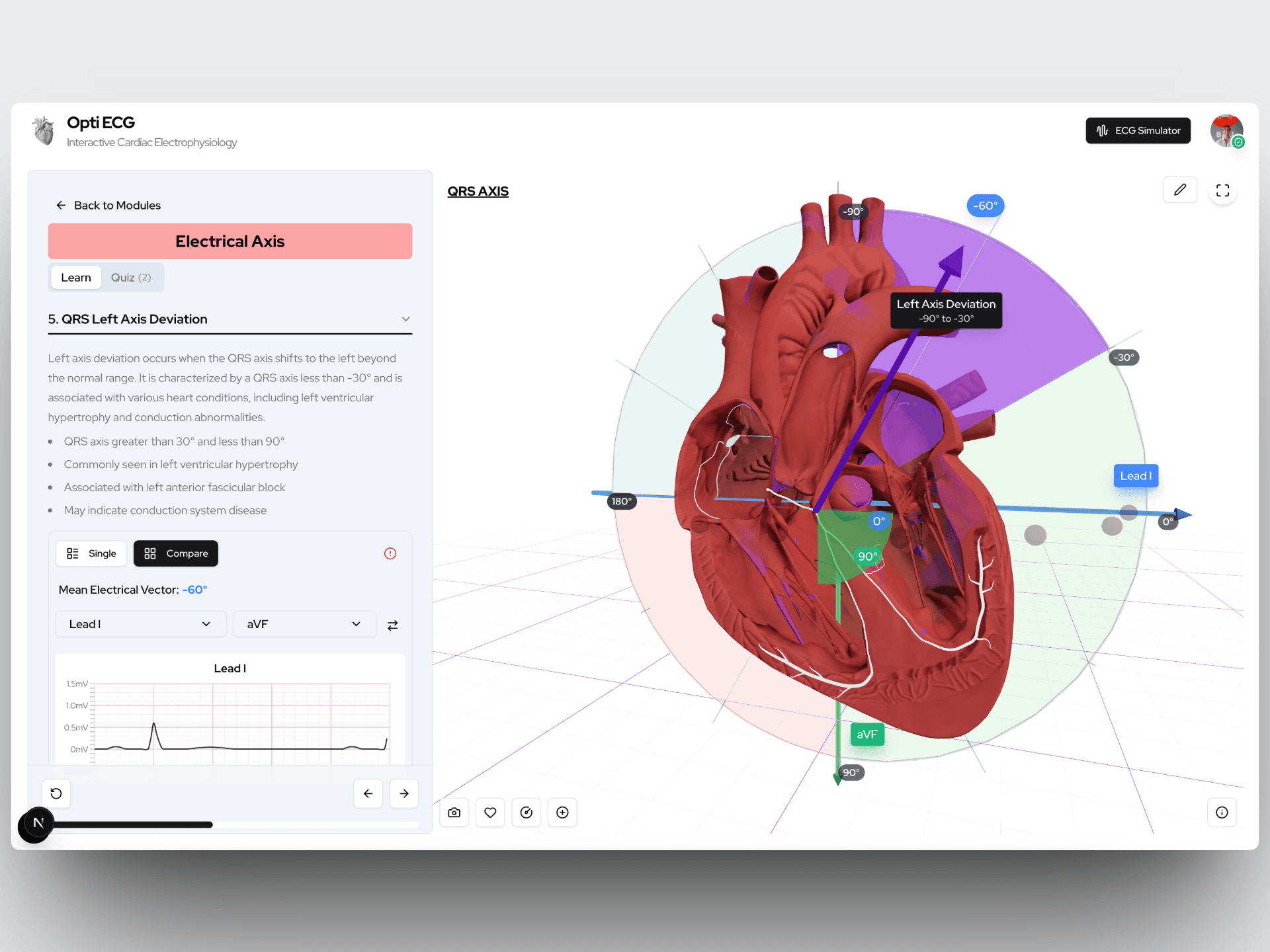
Watch Normal Sinus Rhythm unfold on a beating 3D heart synced to the ECG. Scrub the timeline, highlight each lead, and see exactly how the rhythm produces the tracing.
Related Topics
How helpful was this page?