Also known as: Dog Electrical Axis, Canine Mean Electrical Axis, Dog ECG Axis, Canine QRS Axis
| Topic Type | Interpretation |
| Species | canine |
Key Differences from Human ECG
- Normal canine MEA is +40° to +100°, shifted rightward compared to the human normal of -30° to +90°
- Right axis deviation in dogs is defined as MEA >+100°, and is associated with right ventricular enlargement, pulmonary hypertension, and pulmonic stenosis
- Left axis deviation in dogs is defined as MEA <+40°, and may indicate left ventricular enlargement, left anterior fascicular block, or hyperkalemia
- Cats have an even more rightward normal axis than dogs, typically +0° to +160°
- The dog heart is oriented more cranially in the thorax than the human heart, explaining the normally more rightward axis
- S1Q3 pattern (deep S in lead I, prominent Q in lead III) in dogs suggests right ventricular enlargement or pulmonary disease, similar to human interpretation
Clinical Pearls
- To quickly estimate axis in dogs: if lead I is positive (net upward deflection) and lead aVF is positive, the axis is in the normal quadrant (+40° to +90°); if lead I is negative and aVF is positive, suspect right axis deviation
- Pulmonic stenosis is one of the most common congenital cardiac defects in dogs and causes right axis deviation and right ventricular hypertrophy pattern (S wave deepening in leads I, II, III, aVF)
- Persistent atrial standstill is an extreme axis emergency — hyperkalemia severe enough to abolish P waves while widening QRS complexes also distorts the axis toward the bizarre; this is a cardiovascular emergency
- Left bundle branch block in dogs shifts the axis leftward and produces broad, bizarre QRS complexes — the axis shift alone does not diagnose LBBB but should trigger careful QRS duration assessment
- In dogs with dextrocardia (rare), the normal lead orientations are reversed; the axis will appear severely abnormal on standard lead placement — confirm with chest radiographs if suspected
- Axis determination is most reliable when performed in combination with QRS duration, amplitude, and P wave analysis rather than as an isolated finding
Frequently Asked Questions
What is the normal cardiac axis for a dog?
The normal mean electrical axis (MEA) in dogs is +40° to +100° in the frontal plane. This is more rightward than the human normal of -30° to +90°, reflecting the different anatomical orientation of the canine heart within the thorax. Some references allow +40° to +100° for most breeds, with the understanding that giant breeds tend toward the lower end of normal and smaller breeds toward the higher end. Any axis outside this range warrants investigation for the appropriate underlying cause.
What causes right axis deviation in dogs?
Right axis deviation (MEA >+100°) in dogs is caused by conditions that increase right ventricular muscle mass or alter the balance of ventricular forces toward the right. The most common causes include: pulmonic stenosis (the most common congenital cause), pulmonary hypertension (from any cause including heartworm disease), right ventricular hypertrophy secondary to tricuspid regurgitation, right bundle branch block (which shifts conduction to favor the right ventricle), and dextrocardia. In regions where heartworm disease is endemic, right axis deviation in combination with a large breed dog should always prompt heartworm testing.
What causes left axis deviation in dogs?
Left axis deviation (MEA <+40°) in dogs can result from: left ventricular hypertrophy (severe; dilated cardiomyopathy, hypertrophic cardiomyopathy), left bundle branch block (which delays right ventricular activation and shifts net forces leftward), left anterior fascicular block (a hemiblock), hyperkalemia (which progressively distorts axis as potassium rises), and occasionally obesity or pregnancy (which elevates the diaphragm and shifts the heart's position). Mild left axis deviation (<+40° but not severely negative) in the absence of other findings may occasionally be a normal variant in some large breed dogs.
How do I determine the cardiac axis from a canine ECG?
The simplest clinical method uses the net QRS deflection (positive or negative) in leads I and aVF: If both are positive, axis is +0° to +90° (normal to mildly leftward for dogs). If lead I is positive and aVF is negative, axis is -0° to -90° (left axis deviation). If lead I is negative and aVF is positive, axis is +90° to +180° (right axis deviation). If both are negative, axis is -90° to ±180° (extreme axis deviation). For more precise measurement, find the isoelectric lead (net QRS deflection nearest zero) and the axis is approximately perpendicular to that lead. Use a hexaxial reference chart to convert lead position to degrees.
How does the canine cardiac axis differ from the feline axis?
Cats have an even more rightward normal electrical axis than dogs, typically ranging from approximately +0° to +160° depending on the reference used, though many sources cite +60° to +160° as the core normal range. This reflects the more upright, cranially positioned feline heart compared to the canine heart. Feline ECG complexes are also generally smaller in amplitude due to the feline thoracic conformation and smaller heart size, making axis determination more challenging in cats. Both species differ substantially from the human normal axis of -30° to +90°.
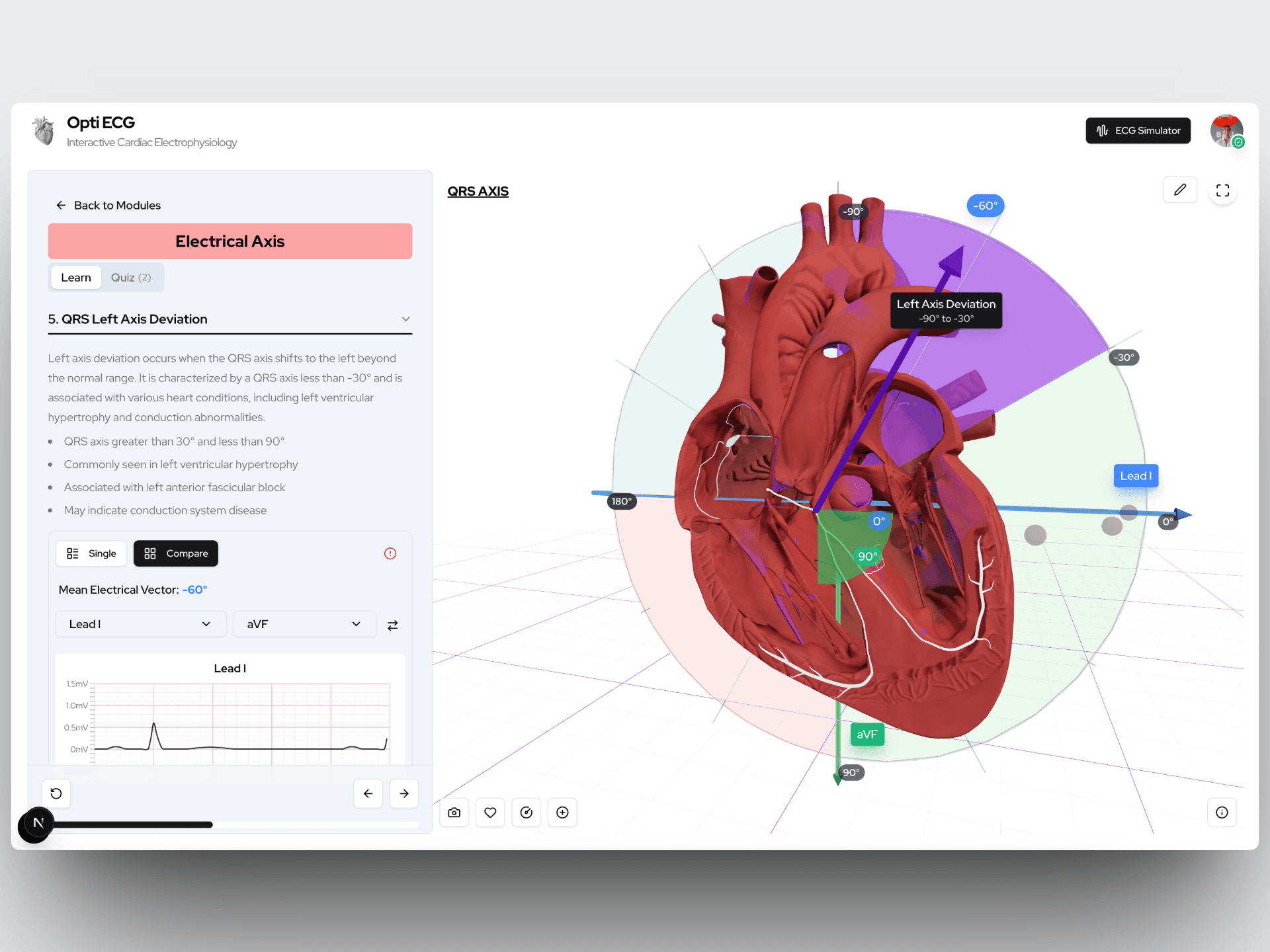
See Canine Cardiac Axis in 3D
Explore ECG rhythms interactively with our simulator and 3D heart visualization synced beat-for-beat. See how electrical activity produces every wave on the tracing.
Related Topics
How helpful was this page?