Also known as: Dog ECG, Dog EKG, Canine EKG Overview, Veterinary ECG Basics
| Topic Type | Overview |
| Species | canine |
Key Differences from Human ECG
- Normal canine heart rate ranges from 60–140 bpm in large breeds and 60–180 bpm in small breeds, significantly broader than the human range of 60–100 bpm
- Respiratory sinus arrhythmia (RSA) is a normal and expected finding in dogs, not a pathological rhythm
- Standard recording position is right lateral recumbency, not supine as in human medicine
- Canine QRS complexes are typically taller and more variable in morphology than human complexes due to the different cardiac orientation
- The normal mean electrical axis in dogs is +40° to +100°, shifted rightward compared to the human normal of -30° to +90°
- P waves in dogs may be notched (P mitrale pattern) as a normal variant in some individuals
- A 50mm/s paper speed is sometimes used in veterinary practice (vs. standard 25mm/s) to better resolve P waves at fast heart rates
Clinical Pearls
- Always record the ECG with the dog in right lateral recumbency for standardized limb lead interpretation; patient positioning significantly affects waveform morphology
- Respiratory sinus arrhythmia is so common and pronounced in dogs that its absence in a resting patient may actually suggest elevated vagal tone suppression or cardiac disease
- Use a paper speed of 50mm/s when the heart rate exceeds 160 bpm to avoid P wave overlap with the preceding T wave
- Breed-specific normals matter: giant breeds (Great Danes, Irish Wolfhounds) have the lowest normal rates and the highest AFib risk; toy breeds have the highest normal rates
- A wandering atrial pacemaker with gradual P wave morphology changes is a normal variant in dogs with strong vagal tone, often seen in brachycephalic breeds
- In brachycephalic breeds, always rule out upper airway obstruction as a driver of pronounced sinus arrhythmia and arrhythmia before attributing it to normal vagal tone
Frequently Asked Questions
What is the normal heart rate for a dog on ECG?
Normal canine heart rate on ECG varies by body size. Large and giant breeds (>25 kg) have a normal resting rate of 60–140 bpm. Small and toy breeds (<10 kg) have a normal resting rate of 60–180 bpm. Medium breeds fall in between at 60–160 bpm. Rates outside these ranges at rest, or rates that fail to vary with respiration (loss of RSA), warrant further evaluation.
Why is respiratory sinus arrhythmia normal in dogs?
Respiratory sinus arrhythmia (RSA) is a normal autonomic phenomenon in dogs caused by cyclic changes in vagal tone synchronized with breathing. During inspiration, vagal tone decreases, allowing the heart rate to increase. During expiration, vagal tone rises, slowing the rate. Dogs have exceptionally strong vagal tone compared to humans, making this cycle much more pronounced. Its presence indicates a healthy, responsive autonomic nervous system.
How should a dog be positioned for ECG recording and why does it matter?
Dogs should be placed in right lateral recumbency (lying on their right side) for standard ECG recording. This position is the established veterinary convention and forms the basis for all published normal canine ECG values. Recording in other positions (sternal, left lateral) will shift the electrical axis and alter waveform morphology, making comparison to reference ranges unreliable. Limb leads should be placed at the elbows and stifles, not on the paws, to reduce motion artifact.
Can I interpret a canine ECG using human ECG normal values?
No. Human and canine ECG normal values differ substantially in heart rate ranges, electrical axis, PR interval, QRS duration, and acceptable waveform morphology. Applying human criteria to a canine ECG will result in over-diagnosis of abnormalities (e.g., calling RSA an arrhythmia, or flagging a normal rightward axis as right axis deviation). Always use species-specific published normal values for canine ECG interpretation.
What paper speed should be used for canine ECG recordings?
The standard paper speed for canine ECG is 25mm/s, which is the same as human practice and allows direct rate calculation using standard methods. However, 50mm/s is commonly used in veterinary practice when heart rates are high (>160 bpm) to separate waveforms that would otherwise overlap, making P wave identification easier. When using 50mm/s, remember to adjust all interval measurements accordingly—each small box represents 0.02 seconds instead of 0.04 seconds.
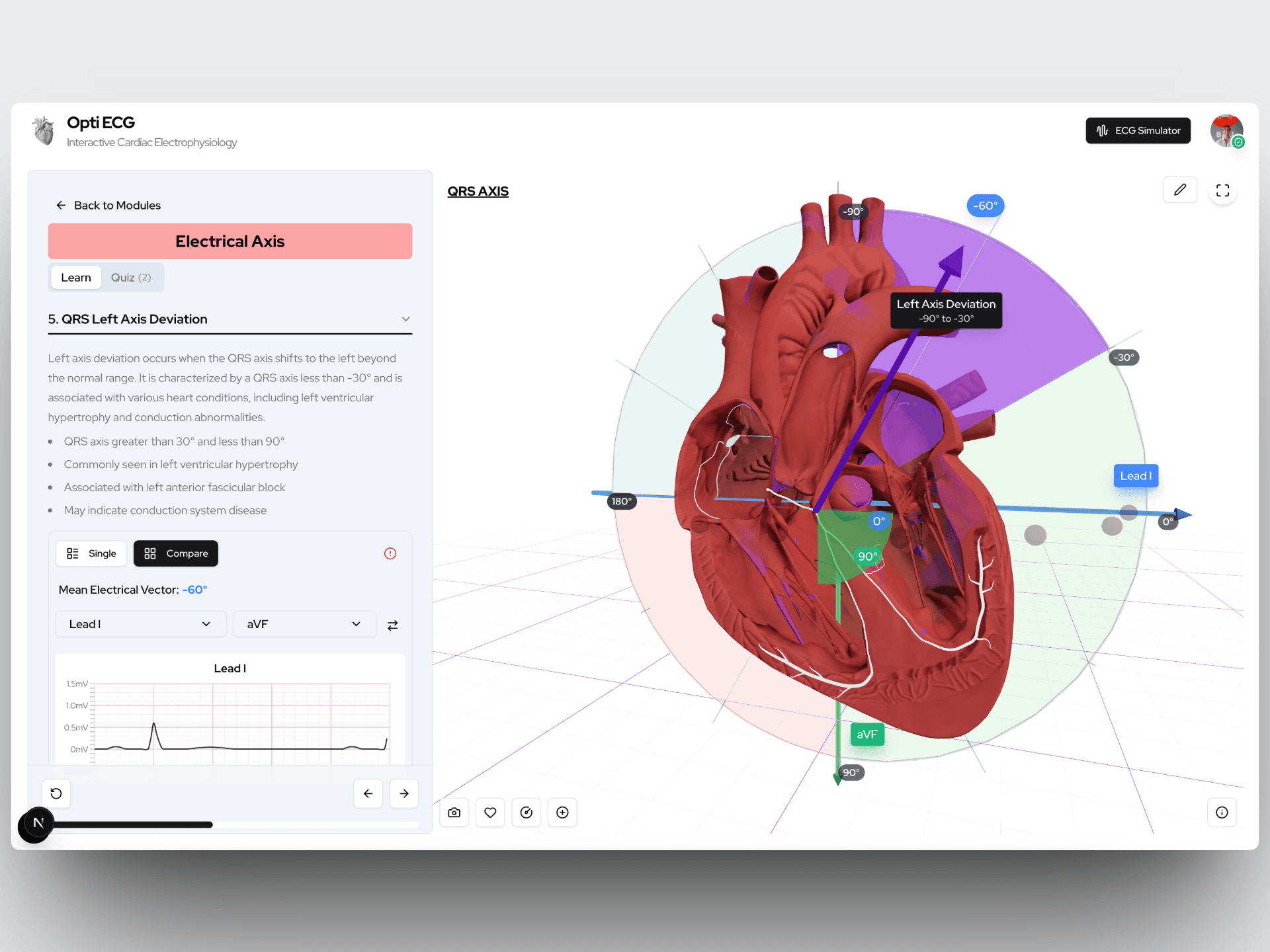
See Canine ECG Overview in 3D
Explore ECG rhythms interactively with our simulator and 3D heart visualization synced beat-for-beat. See how electrical activity produces every wave on the tracing.
Related Topics
How helpful was this page?