Also known as: Dog Heart Arrhythmias, Canine Cardiac Arrhythmias, Dog ECG Abnormalities, Canine Rhythm Disorders
| Topic Type | Overview |
| Species | canine |
Key Differences from Human ECG
- Respiratory sinus arrhythmia is a normal finding in dogs and must not be misclassified as a pathological arrhythmia
- Ventricular premature contractions (VPCs) are common in Boxers (arrhythmogenic right ventricular cardiomyopathy) and Dobermans (dilated cardiomyopathy) as breed-specific presentations
- Third-degree (complete) AV block in dogs most commonly presents with an idioventricular escape rhythm at 20–40 bpm and is a common indication for pacemaker implantation
- Sick sinus syndrome is overrepresented in Miniature Schnauzers, West Highland White Terriers, and Cocker Spaniels
- Ventricular tachycardia in dogs with splenic masses (hemangiosarcoma) is a classic emergency presentation requiring recognition of the ECG pattern and aggressive management
- Supraventricular tachycardias in dogs frequently respond to vagal maneuvers (ocular pressure, carotid sinus massage) or IV diltiazem, similar to human SVT management
Clinical Pearls
- Any dog presenting with collapse, syncope, or exercise intolerance should have an ECG performed immediately — a 6-lead rhythm strip takes less than 2 minutes and can identify life-threatening arrhythmias at point of care
- In Boxer dogs, isolated VPCs with a left bundle branch block morphology (upright in lead I, wide and bizarre QRS) are classic for ARVC — indicating right ventricular origin — consult cardiology for Holter monitoring and management
- Splenic hemangiosarcoma is a red flag for ventricular arrhythmias in large-breed dogs presenting with acute collapse and a palpable abdominal mass; perform FAST ultrasound and ECG simultaneously
- Sick sinus syndrome in Miniature Schnauzers can be intermittent — a normal in-clinic ECG does not rule it out if the history is compelling (episodic collapse, exercise intolerance); 24-hour Holter monitoring is the gold standard
- Hyperkalemia from urethral obstruction or Addisonian crisis produces a classic ECG progression: tall tented T waves → prolonged PR → widened QRS → sine wave pattern → ventricular fibrillation; recognize early
- Digitalis toxicity in dogs produces a variety of arrhythmias but the most classic is AV block with junctional or ventricular escape — always check digoxin levels when a dog on digoxin develops new bradycardia or AV block
Frequently Asked Questions
What are the most common arrhythmias seen in dogs?
The most common arrhythmias encountered in canine patients include: respiratory sinus arrhythmia (normal), atrial fibrillation (most common sustained supraventricular arrhythmia, especially in large breeds), ventricular premature contractions (particularly in Boxers and Dobermans), first-degree AV block (often incidental), sick sinus syndrome (especially in Miniature Schnauzers), and supraventricular tachycardia. Ventricular tachycardia, while less common, is a critical arrhythmia seen in Boxers with ARVC and dogs with splenic masses.
How do I distinguish normal sinus arrhythmia from a pathological rhythm in dogs?
Respiratory sinus arrhythmia produces a smooth, cyclical variation in heart rate that clearly correlates with the breathing pattern — the rate increases with inspiration and slows with expiration. P wave morphology remains consistent (all upright in lead II) and each P wave is followed by a QRS. Pathological rhythms, by contrast, produce abrupt changes in rate or rhythm, P waves that are absent (AFib), abnormally shaped (ectopic atrial), or dissociated from QRS complexes (AV block). Persistent pauses over 2 seconds in a resting dog also warrant further investigation even within the context of RSA.
What ECG findings are associated with hyperkalemia in dogs?
Hyperkalemia in dogs produces a characteristic sequence of ECG changes that progress with rising potassium levels. At mild elevations (5.5–6.5 mEq/L): tall, narrow, tented T waves. At moderate elevations (6.5–7.5 mEq/L): prolonged PR interval, P wave flattening or disappearance, widening of QRS complex. At severe elevations (>7.5 mEq/L): the P wave disappears entirely (sinoventricular rhythm), QRS widens markedly into a sine-wave pattern, and ventricular fibrillation or asystole becomes imminent. Hyperkalemia causes include urethral obstruction, Addison's disease, acute kidney injury, and uroabdomen.
What is arrhythmogenic right ventricular cardiomyopathy in Boxer dogs?
Arrhythmogenic right ventricular cardiomyopathy (ARVC) is a heritable myocardial disease in Boxers (and English Bulldogs) characterized by replacement of right ventricular myocardium with fibrous and fatty tissue. The hallmark ECG finding is ventricular premature contractions with a left bundle branch block morphology — wide, bizarre QRS complexes that are predominantly negative in lead II and positive in lead I (indicating a right ventricular origin). Dogs may have isolated VPCs, ventricular tachycardia, or sudden death. The disease ranges from asymptomatic (incidentally detected VPCs) to fatal arrhythmia. Holter monitoring, echocardiography, and genetic testing are used for diagnosis and screening.
When should a dog with arrhythmia be referred to a cardiologist?
Referral to a veterinary cardiologist is warranted when: a sustained or symptomatic arrhythmia is detected that requires specialized management (AFib, sustained VT, complete AV block); the dog has syncope or collapse with an unclear cause; VPCs are frequent (>1000 per 24 hours on Holter) or polymorphic; a breed predisposition disease is suspected (ARVC in Boxers, DCM in Dobermans); antiarrhythmic drugs are being considered (narrow therapeutic windows, proarrhythmic risks); or pacemaker implantation is being evaluated for sick sinus syndrome or complete AV block.
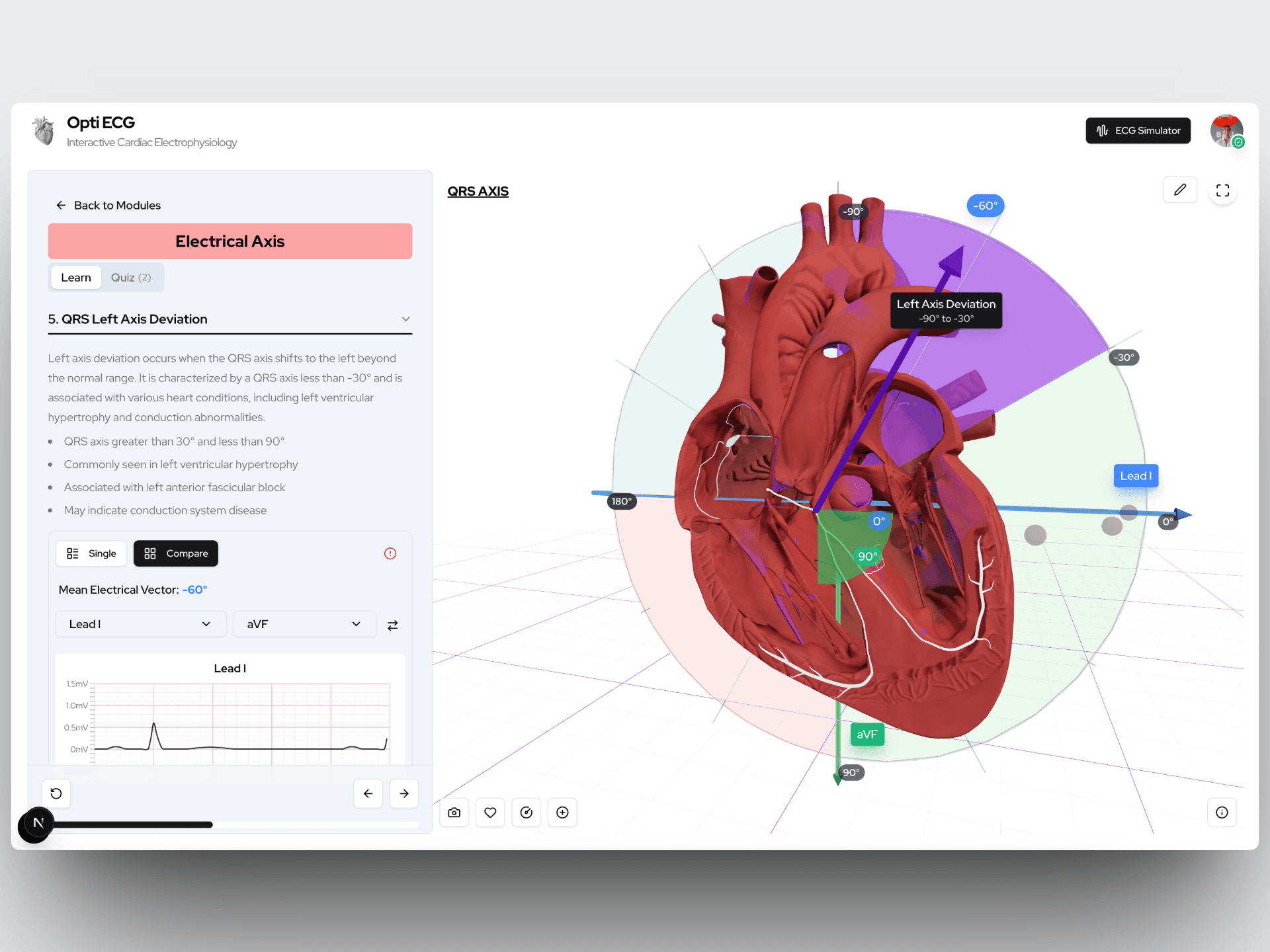
See Common Canine Arrhythmias in 3D
Explore ECG rhythms interactively with our simulator and 3D heart visualization synced beat-for-beat. See how electrical activity produces every wave on the tracing.
Related Topics
How helpful was this page?