Also known as: Dog AFib, Canine AFib, Dog Atrial Fibrillation, AF in Dogs
| Topic Type | Rhythm |
| Species | canine |
Key Differences from Human ECG
- AFib is the most common significant arrhythmia in large and giant breed dogs, in contrast to humans where it is more broadly distributed across age and body size
- Lone AFib (AFib without underlying structural disease) occurs in giant breeds — particularly Irish Wolfhounds — at rates substantially higher than in humans
- Ventricular response rates in canine AFib are typically 160–240 bpm at rest, much faster than in untreated human AFib, due to the dog's shorter AV nodal refractory period
- The fibrillatory baseline in dogs is often fine and difficult to distinguish from noise; absence of P waves and irregularly irregular R-R intervals are the diagnostic keys
- Rate control targets in dogs are typically <160 bpm at rest using diltiazem, digoxin, or atenolol — similar drug classes to human medicine but different dosing
- Cardioversion is rarely pursued in dogs with structural disease because recurrence is near-universal; rate control is the primary management strategy
Clinical Pearls
- The hallmark triad of canine AFib on ECG: no discernible P waves, irregularly irregular R-R intervals, and fine fibrillatory baseline (f waves) — all three together are diagnostic
- In giant breed dogs presenting with exercise intolerance or syncope, always run an ECG — AFib is frequently the culprit and may be the presenting sign of occult dilated cardiomyopathy
- A ventricular rate consistently above 180 bpm at rest in a dog with AFib indicates inadequate rate control and warrants medication adjustment; rates this high impair ventricular filling and reduce cardiac output
- Digoxin remains useful in dogs with AFib and concurrent dilated cardiomyopathy because it provides rate control while also providing mild positive inotropy — unlike beta-blockers and calcium channel blockers which are negatively inotropic
- Irish Wolfhounds have a genetic predisposition to both dilated cardiomyopathy and AFib; annual cardiac screening with ECG and echocardiography is recommended for this breed starting at age 3–4
- When evaluating a dog for possible AFib, compare the current ECG to any previous recordings — a new onset of irregularly irregular rhythm with absent P waves in a previously normal ECG is highly significant
Frequently Asked Questions
Which dog breeds are most predisposed to atrial fibrillation?
Large and giant breed dogs carry the highest risk for atrial fibrillation, particularly Irish Wolfhounds, Great Danes, Doberman Pinschers, Boxers, Newfoundlands, and Saint Bernards. These breeds are predisposed to dilated cardiomyopathy, which causes atrial enlargement that creates the electrophysiological substrate for AFib. Irish Wolfhounds are uniquely susceptible and can develop lone AFib (without overt structural disease) due to breed-specific genetic factors affecting cardiac ion channels and autonomic tone.
How is atrial fibrillation diagnosed on a canine ECG?
Canine AFib is diagnosed by three ECG findings: (1) Absence of distinct P waves — the isoelectric line is replaced by a fine, irregular fibrillatory baseline (f waves) of varying amplitude; (2) Irregularly irregular R-R intervals with no discernible pattern or cycle length regularity; (3) A ventricular rate that is typically rapid at rest (often 160–240 bpm in untreated dogs). QRS complexes are usually narrow and of normal morphology unless aberrant conduction or a concurrent bundle branch block is present.
What is the treatment for atrial fibrillation in dogs?
Management of canine AFib focuses primarily on ventricular rate control rather than rhythm conversion to sinus rhythm. Rate control targets a resting heart rate below 140–160 bpm. First-line agents include diltiazem (calcium channel blocker), digoxin (especially when DCM is concurrent), and atenolol (beta-blocker), often used in combination. Electrical cardioversion or pharmacologic conversion with sotalol or quinidine can be attempted in lone AFib (no structural disease) of recent onset, but recurrence is common when underlying structural disease is present. Concurrent heart failure management (diuretics, ACE inhibitors, pimobendan) is essential when AFib accompanies DCM.
What is the prognosis for a dog diagnosed with atrial fibrillation?
Prognosis depends heavily on whether underlying structural heart disease is present. Dogs with lone AFib and no structural disease that achieve good rate control can have a near-normal lifespan. Dogs with AFib secondary to dilated cardiomyopathy have a more guarded prognosis, typically 6–24 months from the onset of heart failure symptoms, though this varies by breed and response to therapy. Dogs with AFib and concurrent congestive heart failure that is well-managed with pimobendan, diuretics, and ACE inhibitors survive longer than those with uncontrolled rate or refractory heart failure.
Why do dogs with AFib have faster ventricular rates than humans with AFib?
Dogs have a shorter intrinsic AV nodal refractory period and faster baseline conduction compared to humans. The AV node in dogs conducts more atrial impulses per minute before entering refractoriness. This physiological difference means that untreated AFib in dogs typically results in ventricular rates of 180–260 bpm at rest, whereas untreated human AFib typically produces rates of 110–160 bpm. This higher rate in dogs makes prompt rate control even more important, as sustained rapid rates cause tachycardia-induced cardiomyopathy on top of any pre-existing structural disease.
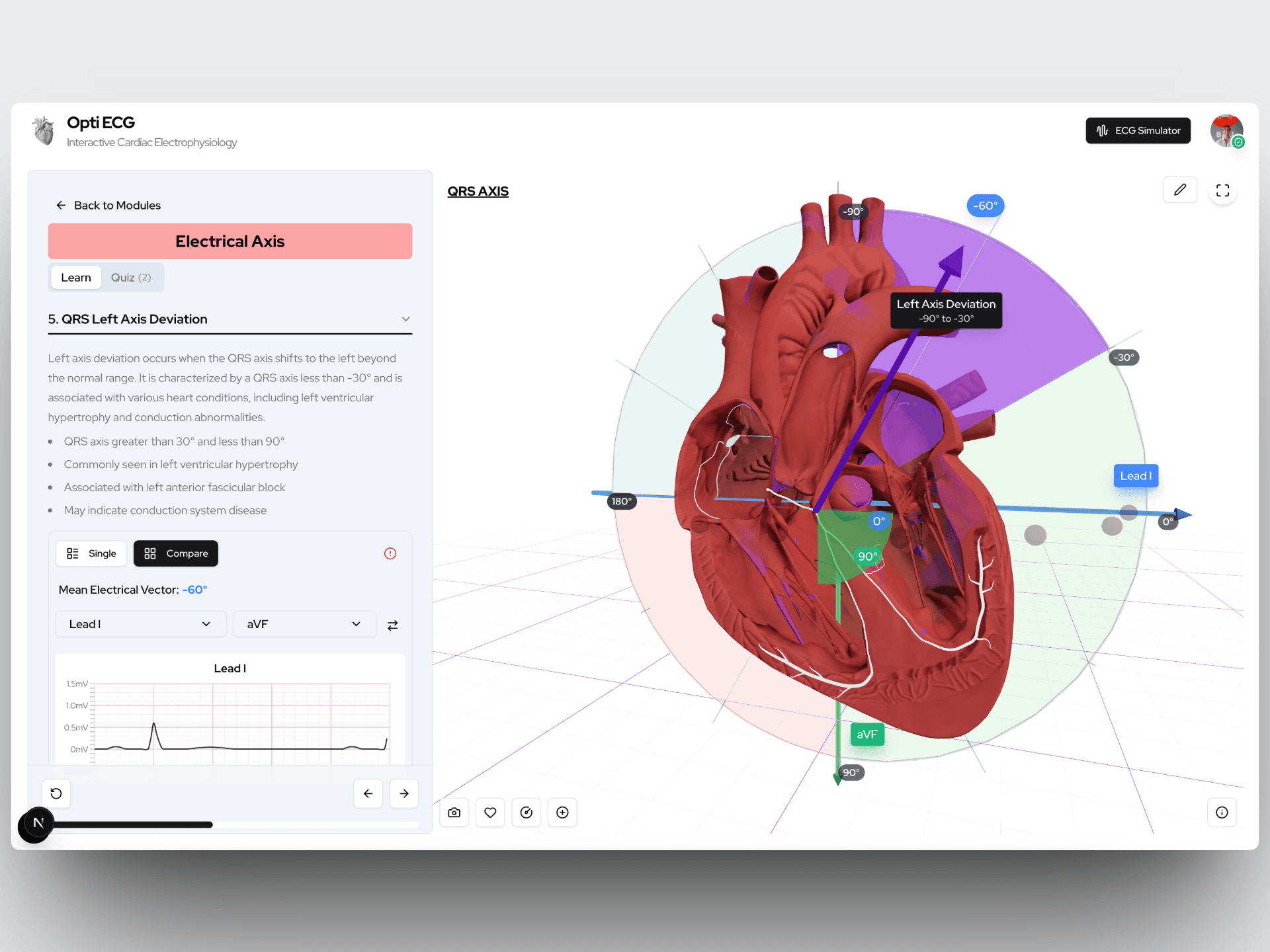
See Canine Atrial Fibrillation in 3D
Explore ECG rhythms interactively with our simulator and 3D heart visualization synced beat-for-beat. See how electrical activity produces every wave on the tracing.
Related Topics
How helpful was this page?