Also known as: Mobitz Type II, Infranodal Block
ECG Characteristics
| Heart Rate | Normal or slow depending on conduction ratio |
| Rhythm | Regular when conducting; irregular with dropped beats |
| P Wave | Normal morphology; more P waves than QRS complexes |
| PR Interval | Constant (does not lengthen before dropped beats) |
| QRS Duration | Often wide (> 0.12s) indicating infranodal block |
Mechanism
Intermittent complete failure of conduction in the His-Purkinje system (below the AV node). Unlike Wenckebach, there is no progressive fatigue — conduction either succeeds completely or fails completely.
Key Features on ECG
- Constant PR interval in conducted beats
- Sudden dropped QRS without preceding PR prolongation
- Often associated with wide QRS (bundle branch block pattern)
- Fixed or variable conduction ratios (2:1, 3:1, etc.)
- May show 2:1 block (difficult to classify as Type I vs II without longer strip)
Causes
- Anterior myocardial infarction (LAD territory)
- Conduction system fibrosis (Lenegre's disease)
- Conduction system calcification (Lev's disease)
- Post-cardiac surgery or ablation
- Infiltrative diseases (sarcoidosis, amyloidosis)
Clinical Significance
Mobitz Type II is a high-risk conduction disturbance that frequently progresses to complete heart block, often unpredictably. Pacemaker implantation is generally indicated regardless of symptoms because of the risk of sudden complete block with inadequate escape rhythm.
Frequently Asked Questions
Why is Mobitz Type II more dangerous than Type I?
Mobitz Type II occurs below the AV node in the His-Purkinje system, where damage is often structural and progressive. It can suddenly progress to complete heart block without warning. The ventricular escape rhythm below the block is slow (20–40 bpm) and unreliable, making syncope or cardiac arrest more likely.
Does Mobitz Type II always need a pacemaker?
Current guidelines recommend permanent pacemaker implantation for Mobitz Type II regardless of symptoms, because of the unpredictable risk of progression to complete heart block. This is in contrast to Wenckebach, which rarely requires pacing.
How do you classify 2:1 AV block?
With 2:1 conduction (every other P wave blocked), you cannot determine whether the PR interval would progressively lengthen. Clues favoring Type I: narrow QRS, PR prolongation in conducted beats, inferior MI. Clues favoring Type II: wide QRS (BBB pattern), constant PR in conducted beats, anterior MI. A longer recording may capture 3:2 or 4:3 ratios that clarify the type.
See Second-Degree AV Block Type II (Mobitz II) in 3D
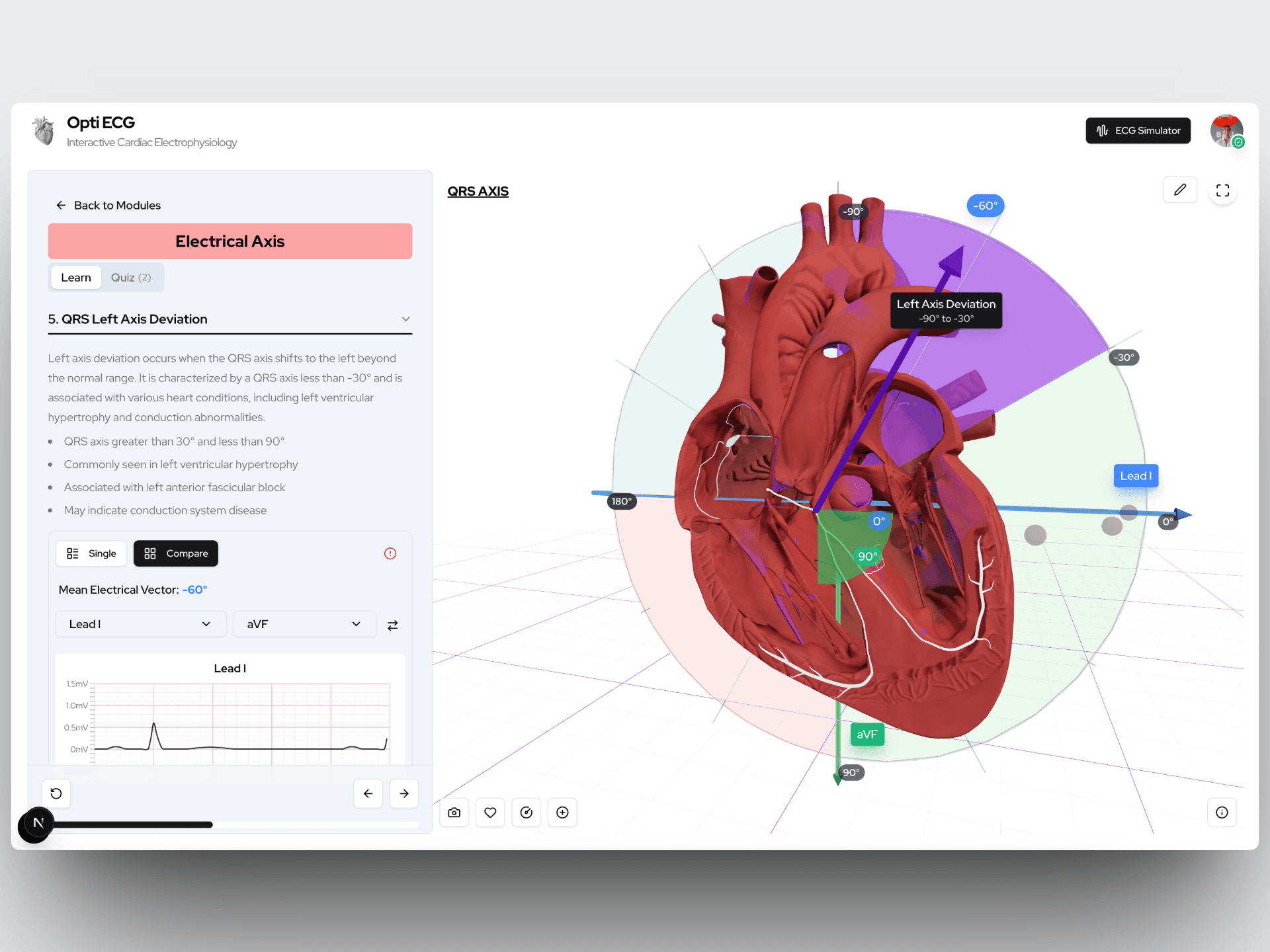
Watch Second-Degree AV Block Type II (Mobitz II) unfold on a beating 3D heart synced to the ECG. Scrub the timeline, highlight each lead, and see exactly how the rhythm produces the tracing.
Related Topics
How helpful was this page?