Also known as: Mobitz Type I, Wenckebach Block, Wenckebach Periodicity
ECG Characteristics
| Heart Rate | Usually normal or slightly slow |
| Rhythm | Irregular — grouped beating pattern |
| P Wave | Normal morphology; more P waves than QRS complexes |
| PR Interval | Progressively lengthens until a beat is dropped, then resets |
| QRS Duration | < 0.12 seconds (unless concurrent BBB) |
Mechanism
Progressive fatigue of AV nodal conduction with each successive beat. Each impulse encounters an increasingly refractory AV node until one impulse fails to conduct. After the dropped beat, the AV node recovers and the cycle repeats.
Key Features on ECG
- Progressive PR prolongation from beat to beat
- Dropped QRS (P wave without following QRS)
- Grouped beating pattern with repeating Wenckebach cycles
- R-R intervals gradually shorten before the dropped beat
- PR interval resets to shortest value after the dropped beat
Causes
- Increased vagal tone (common in athletes and during sleep)
- Inferior myocardial infarction (AV nodal artery involvement)
- AV-nodal blocking drugs
- Myocarditis
- Post-cardiac surgery
Clinical Significance
Wenckebach is generally benign and located at the AV node level. It rarely progresses to complete heart block. In the setting of acute MI, it usually resolves spontaneously. Pacing is rarely needed unless symptomatic.
Frequently Asked Questions
What is the classic Wenckebach pattern on ECG?
The classic pattern shows progressive PR lengthening with each consecutive beat until one P wave is not followed by a QRS (dropped beat). After the dropped beat, the PR interval returns to its shortest value and the cycle repeats. The typical cycle involves 3:2, 4:3, or 5:4 conduction ratios.
How does Wenckebach differ from Mobitz Type II?
Wenckebach (Type I) has progressive PR prolongation before the dropped beat and occurs at the AV node level. Mobitz Type II has a constant PR interval with sudden, unexpected dropped beats and occurs below the AV node (His-Purkinje system). Type II is more dangerous and more likely to progress to complete heart block.
Is Wenckebach normal during sleep?
Yes, Wenckebach periodicity during sleep is a normal finding related to increased vagal tone. It is commonly seen on Holter monitoring in healthy individuals and athletes and does not require treatment or further workup unless associated with symptoms.
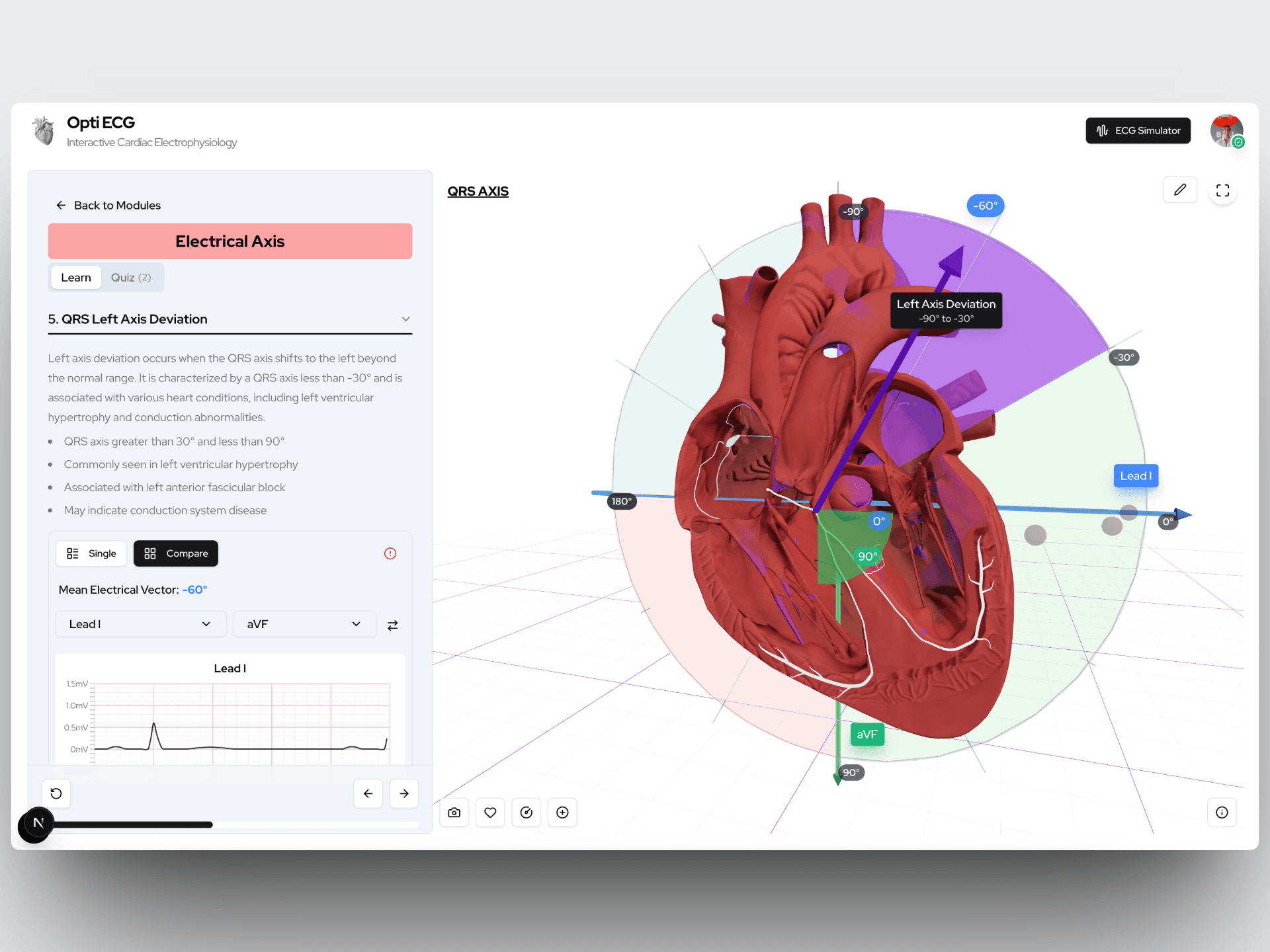
See Second-Degree AV Block Type I (Wenckebach) in 3D
Watch Second-Degree AV Block Type I (Wenckebach) unfold on a beating 3D heart synced to the ECG. Scrub the timeline, highlight each lead, and see exactly how the rhythm produces the tracing.
Related Topics
How helpful was this page?