Also known as: 1st Degree Heart Block, Prolonged PR Interval
ECG Characteristics
| Heart Rate | Normal (depends on underlying sinus rate) |
| Rhythm | Regular |
| P Wave | Normal P wave morphology; every P wave followed by a QRS |
| PR Interval | > 0.20 seconds (consistently prolonged but constant) |
| QRS Duration | < 0.12 seconds (unless concurrent bundle branch block) |
Mechanism
Delayed conduction through the AV node (most commonly) or the His-Purkinje system. Every impulse is conducted, but the time from atrial to ventricular depolarization is prolonged.
Key Features on ECG
- PR interval > 0.20 seconds
- Constant PR interval (no progressive lengthening)
- Every P wave conducted with a QRS
- 1:1 AV conduction ratio
- Otherwise normal rhythm
Causes
- Increased vagal tone
- AV-nodal blocking drugs (beta-blockers, calcium channel blockers, digoxin)
- Myocarditis
- Inferior myocardial infarction
- Age-related conduction system fibrosis
- May be a normal variant in athletes
Clinical Significance
First-degree AV block is typically benign and rarely requires treatment. Marked prolongation (PR > 0.30s) or progression to higher-degree block warrants monitoring. In the setting of acute MI, it may indicate AV nodal ischemia.
Frequently Asked Questions
Is first-degree AV block really a block?
First-degree AV block is a misnomer — it is actually a conduction delay, not a true block. Every atrial impulse is successfully conducted to the ventricles; it just takes longer than normal (PR > 0.20 seconds). No impulses are dropped. Some electrophysiologists prefer the term 'first-degree AV delay.'
Does first-degree AV block require treatment?
Isolated first-degree AV block is almost never treated. However, it warrants attention when: the PR interval is markedly prolonged (> 0.30s), it is newly acquired, it occurs with symptoms (syncope), it progresses to higher-degree block, or it is associated with other conduction abnormalities (bundle branch block).
Is first-degree AV block common in dogs?
First-degree AV block is relatively common in dogs and is often associated with increased vagal tone, which is normal in many breeds. It is also seen with AV-nodal blocking drugs and myocardial disease. In dogs, a PR interval greater than 0.13 seconds (130 ms) is generally considered prolonged.
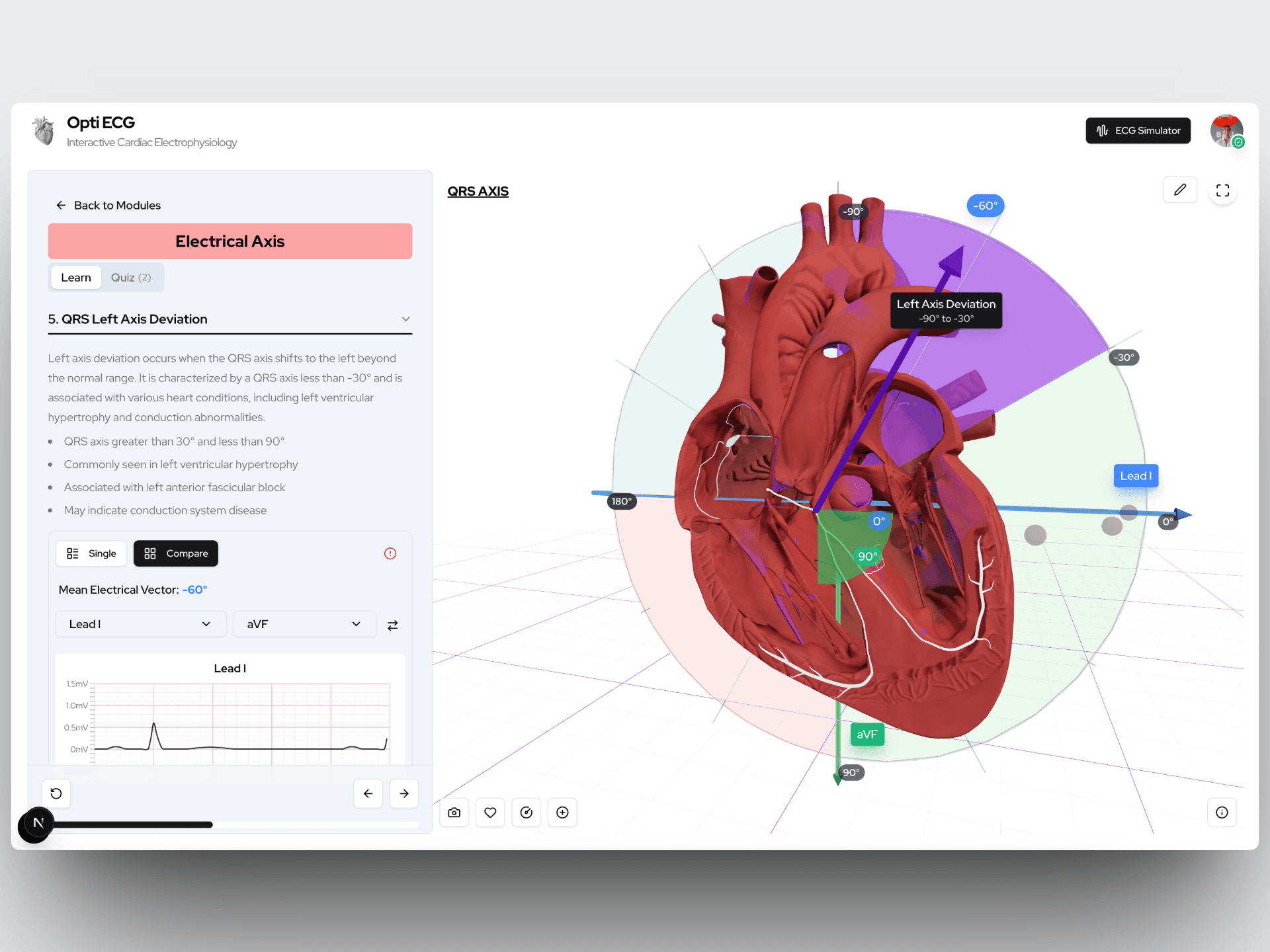
See First-Degree AV Block in 3D
Watch First-Degree AV Block unfold on a beating 3D heart synced to the ECG. Scrub the timeline, highlight each lead, and see exactly how the rhythm produces the tracing.
Related Topics
How helpful was this page?