Also known as: LBBB
ECG Characteristics
| Heart Rate | Normal (depends on underlying rhythm) |
| Rhythm | Regular (depends on underlying rhythm) |
| P Wave | Normal |
| PR Interval | Normal (unless concurrent first-degree block) |
| QRS Duration | ≥ 0.12 seconds |
Mechanism
The left bundle branch is blocked, so the left ventricle depolarizes late via spread from the right ventricle. This reverses the normal septal depolarization direction (now right-to-left).
Key Features on ECG
- Broad, notched or slurred R wave in I, aVL, V5–V6
- QS or rS pattern in V1–V2
- Absence of septal q waves in I, V5–V6
- QRS duration ≥ 0.12 seconds
- Discordant ST-T changes (opposite to QRS direction)
Causes
- Hypertension
- Aortic valve disease
- Dilated cardiomyopathy
- Ischemic heart disease
- Conduction system fibrosis (Lenegre/Lev disease)
- Rarely a normal variant (unlike RBBB)
Clinical Significance
New LBBB is almost always pathological and may indicate acute MI (Sgarbossa criteria), severe heart disease, or cardiomyopathy. LBBB makes standard ECG interpretation of ischemia difficult — modified Sgarbossa criteria are used. LBBB may also indicate candidacy for cardiac resynchronization therapy (CRT).
Frequently Asked Questions
Why does LBBB make MI diagnosis difficult?
LBBB changes the entire sequence of ventricular depolarization and repolarization, producing secondary ST-T changes that mask or mimic MI patterns. Standard ST elevation criteria cannot be used. The Sgarbossa criteria (concordant ST elevation > 1mm, ST depression > 1mm in V1-V3, discordant ST elevation > 5mm or > 25% of QRS depth) help identify MI in the presence of LBBB.
Is new LBBB equivalent to STEMI?
Previously, new LBBB was considered a STEMI equivalent requiring emergent catheterization. Current guidelines have moved away from this — new LBBB alone without other evidence of ischemia (symptoms, troponin elevation, Sgarbossa criteria) is no longer an automatic indication for emergent PCI. Clinical context matters.
What is cardiac resynchronization therapy for LBBB?
CRT (biventricular pacing) places an additional pacing lead in the left ventricle to restore synchronous contraction. It is indicated for patients with LBBB (QRS ≥ 150ms), reduced ejection fraction (≤ 35%), and heart failure symptoms despite optimal medical therapy. LBBB patients benefit most from CRT because it corrects the dyssynchrony caused by delayed left ventricular activation.
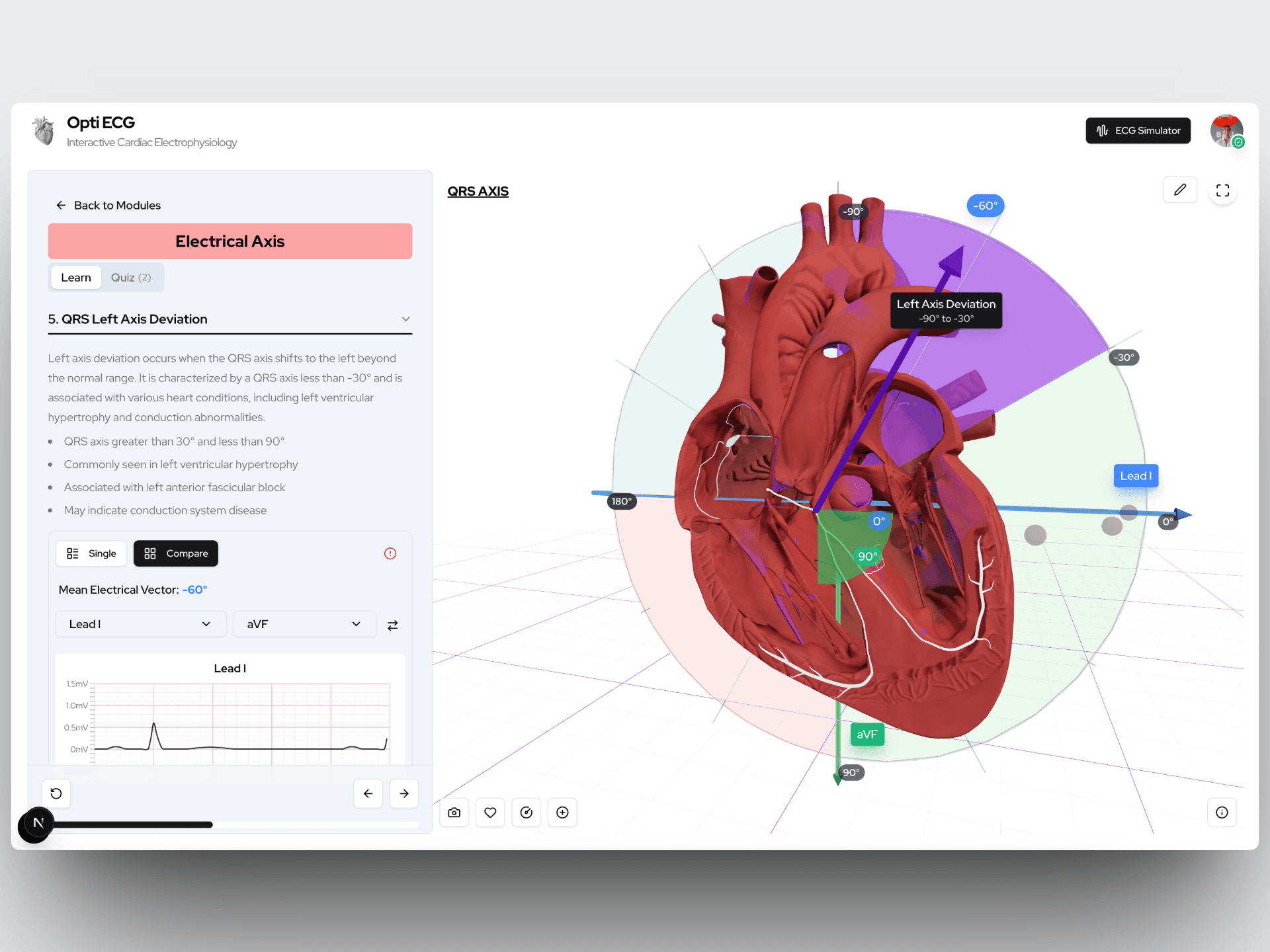
See Left Bundle Branch Block in 3D
Watch Left Bundle Branch Block unfold on a beating 3D heart synced to the ECG. Scrub the timeline, highlight each lead, and see exactly how the rhythm produces the tracing.
Related Topics
How helpful was this page?