Also known as: LAFB, Left Anterior Hemiblock
ECG Characteristics
| Heart Rate | Normal (depends on underlying rhythm) |
| Rhythm | Regular (depends on underlying rhythm) |
| P Wave | Normal |
| PR Interval | Normal |
| QRS Duration | Normal to slightly prolonged (< 0.12 seconds, typically 0.10–0.11s) |
Mechanism
Block of the anterior (superior) fascicle of the left bundle branch. The initial septal and inferior wall depolarization occurs via the posterior fascicle, then spreads superiorly and leftward to activate the anterolateral wall.
Key Features on ECG
- Left axis deviation (-45° to -90°)
- Small q in lead I, small r in lead III (qR in I, rS in III)
- QRS duration normal or slightly prolonged
- No other cause of left axis deviation
- Peak of R wave in aVL later than peak in aVR
Causes
- Hypertension
- Aortic valve disease
- Anterior MI (LAD territory)
- Cardiomyopathy
- Idiopathic fibrosis
- Normal aging process
Clinical Significance
LAFB is the most common fascicular block and is often an incidental finding. Isolated LAFB is generally benign. However, LAFB combined with RBBB (bifascicular block) raises concern for progression to complete heart block.
Frequently Asked Questions
What is bifascicular block?
Bifascicular block is the combination of RBBB with either LAFB (most common) or LPFB. It indicates disease in two of the three fascicles of the ventricular conduction system. While not immediately dangerous, it raises the possibility that the remaining fascicle could fail, causing complete heart block.
How do you identify LAFB on ECG?
LAFB is diagnosed by left axis deviation (typically more negative than -45°) with a qR pattern in lead I and an rS pattern in lead III, in the absence of other causes of left axis deviation (LVH, inferior MI). The QRS is not significantly widened since conduction still uses the Purkinje system via the posterior fascicle.
Why is LAFB more common than LPFB?
The anterior fascicle is thinner, longer, and has a single blood supply (LAD), making it more vulnerable to ischemia and fibrosis. The posterior fascicle is thicker, shorter, and has dual blood supply (LAD and RCA), making it more resilient. This is why LAFB is the most common fascicular block and LPFB is rare.
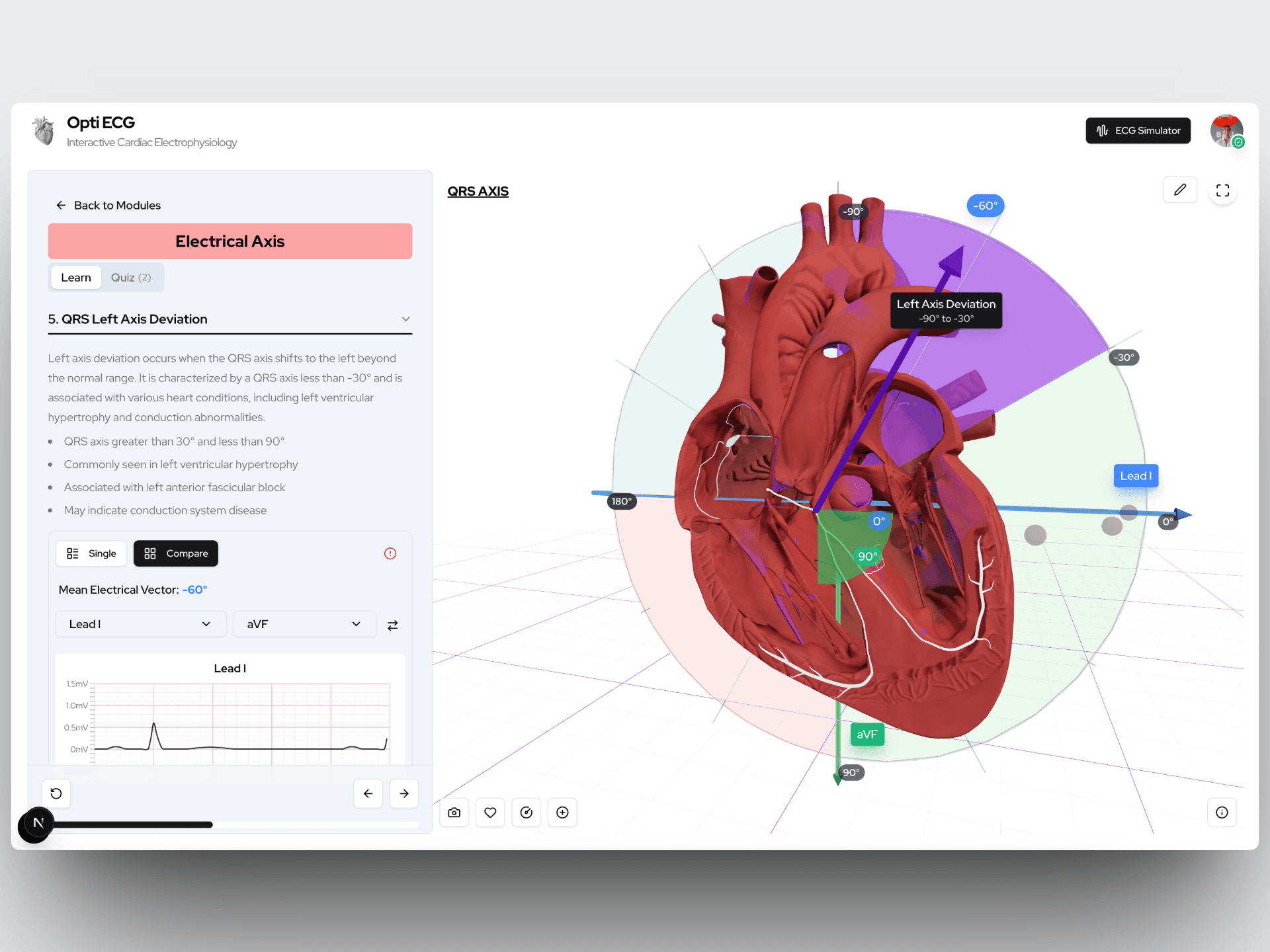
See Left Anterior Fascicular Block in 3D
Explore ECG rhythms interactively with our simulator and 3D heart visualization synced beat-for-beat. See how electrical activity produces every wave on the tracing.
Related Topics
How helpful was this page?