Also known as: LPFB, Left Posterior Hemiblock
ECG Characteristics
| Heart Rate | Normal |
| Rhythm | Regular (depends on underlying rhythm) |
| P Wave | Normal |
| PR Interval | Normal |
| QRS Duration | Normal to slightly prolonged |
Mechanism
Block of the posterior (inferior) fascicle of the left bundle branch. Initial depolarization occurs via the anterior fascicle and spreads inferiorly and rightward.
Key Features on ECG
- Right axis deviation (+90° to +180°)
- Small r in lead I, small q in lead III (rS in I, qR in III)
- QRS duration normal or slightly prolonged
- No other cause of right axis deviation (RVH, PE, lateral MI)
Causes
- Extensive anterior MI
- Cardiomyopathy
- Idiopathic fibrosis
- Usually indicates significant conduction system disease
Clinical Significance
LPFB is rare because the posterior fascicle is thick and has dual blood supply. Its presence usually indicates more extensive conduction system disease than LAFB. LPFB with RBBB (bifascicular block) carries a higher risk of progression to complete heart block than LAFB + RBBB.
Frequently Asked Questions
Why is LPFB a diagnosis of exclusion?
Right axis deviation has many causes (RVH, pulmonary embolism, lateral MI, normal variant in tall/thin individuals). LPFB should only be diagnosed after excluding these more common causes. The rarity of LPFB and the abundance of other causes of RAD make it a diagnosis of exclusion.
What is the significance of RBBB + LPFB?
RBBB with LPFB indicates bifascicular block with disease in two of three conduction fascicles. The only remaining functional fascicle is the anterior fascicle. This combination carries a higher risk of progression to complete heart block compared to RBBB + LAFB and may warrant closer monitoring or prophylactic pacing consideration.
How rare is LPFB compared to LAFB?
LPFB is much rarer than LAFB — approximately 10–20 times less common. This is because the posterior fascicle is anatomically better protected: it is thicker, shorter, has a fan-like distribution, and receives dual blood supply from both the left anterior descending and right coronary arteries.
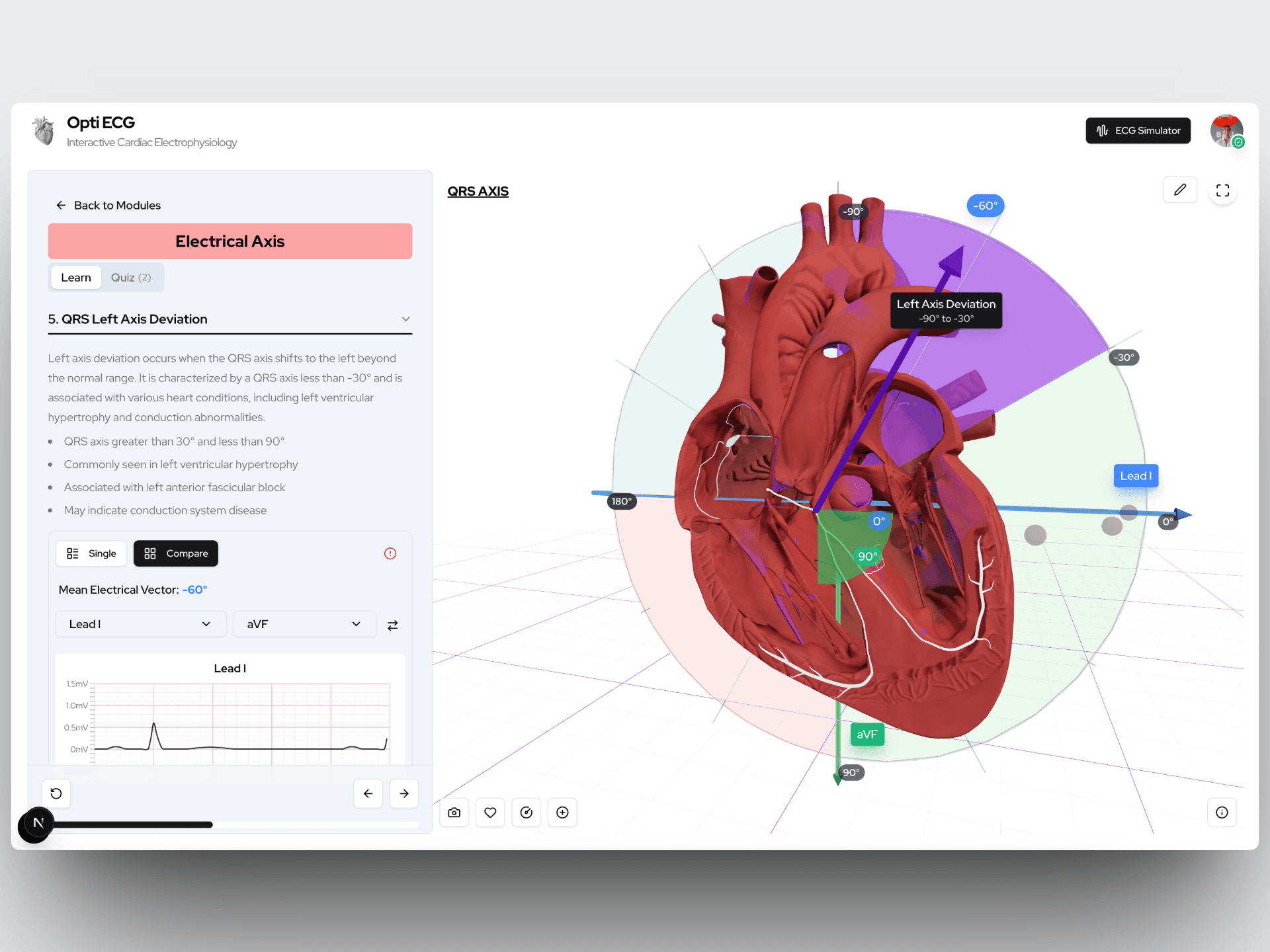
See Left Posterior Fascicular Block in 3D
Explore ECG rhythms interactively with our simulator and 3D heart visualization synced beat-for-beat. See how electrical activity produces every wave on the tracing.
Related Topics
How helpful was this page?