Also known as: Cat ECG, Cat EKG, Feline EKG Overview, Cat Cardiac Rhythm, Feline Electrocardiogram
| Topic Type | Overview |
| Species | feline |
Key Differences from Human ECG
- Normal feline heart rate is 140–240 bpm, significantly higher than canine (60–180 bpm) or human (60–100 bpm) norms
- Feline ECG complexes have very small amplitudes due to the small heart size and thoracic conformation; R wave in lead II is normally less than 0.9 mV (vs 2.5–3.0 mV in humans)
- Normal feline electrical axis is approximately +0° to +160°, more rightward than dogs (+40° to +100°)
- Respiratory sinus arrhythmia is uncommon in cats — regular rhythm is the expected normal finding unlike in dogs
- Cats rarely exhibit P waves clearly on standard ECG due to small atrial mass; when P waves are absent at a fast rate, artifact or true SVT must be carefully distinguished
- Hypertrophic cardiomyopathy (HCM) is by far the most common cardiac disease in cats, and the ECG may be completely normal even in severe HCM — echocardiography is required for definitive diagnosis
Clinical Pearls
- A regular heart rate between 140–240 bpm with small, narrow QRS complexes and difficult-to-visualize P waves is likely normal sinus rhythm in a stressed clinic cat — do not over-diagnose SVT in this context
- ECG in cats is less sensitive for detecting cardiac disease than in dogs; a normal feline ECG does not rule out HCM, and echocardiography is the gold standard for cats with murmurs or respiratory distress
- Left ventricular hypertrophy pattern on feline ECG (tall R waves in lead II >0.9 mV, prolonged QRS duration) may support HCM but is insensitive — many cats with severe HCM have a normal ECG
- Saddle thrombus (aortic thromboembolism) in cats is a cardiac emergency that often occurs on the background of HCM with atrial enlargement — the presenting ECG may show AFib or sinus tachycardia without pathognomonic changes
- Cats with pleural effusion (often from HCM or CHF) have markedly reduced ECG complex amplitudes — small complexes in a cat with respiratory distress should raise suspicion for effusion and prompt thoracocentesis evaluation
- Rate control in feline AFib is challenging because cats tolerate atenolol and diltiazem but the target resting rate in cats is <200 bpm (higher than canine targets) due to the higher physiological baseline
Frequently Asked Questions
What is the normal heart rate for a cat on ECG?
The normal feline heart rate on ECG is 140–240 bpm. Cats are physiologically tachycardic compared to humans and dogs. In the clinic environment, heart rates at the higher end of this range (180–220 bpm) are common due to stress-related sympathetic stimulation. Rates consistently below 140 bpm in a resting, non-sedated cat may indicate sinus bradycardia (consider hypothermia, vagotonia, or drug effects). Rates persistently above 240 bpm, especially if the rhythm is regular and P waves are absent, raise concern for supraventricular tachycardia.
Why are ECG complexes so small in cats?
Feline ECG complexes are small because of the cat's small heart size, the rounded compact thoracic conformation, and the typically high amount of pericardial fat in cats. Smaller heart mass generates less total electrical potential. Additionally, the cat's thoracic anatomy places the heart more centrally and surrounded by structures that may attenuate the signal reaching the skin electrodes. The presence of pleural effusion (common in cats with congestive heart failure from HCM) further reduces complex amplitudes by insulating the heart from the chest wall. Normal maximum R wave in lead II for cats is 0.9 mV, compared to 2.5–3.0 mV in humans.
How does ECG differ between cats and dogs?
Key differences include: heart rate (cats 140–240 bpm vs dogs 60–180 bpm), complex amplitude (cats smaller due to small heart, dogs generally larger), electrical axis (cats more rightward at +0° to +160° vs dogs +40° to +100°), respiratory sinus arrhythmia (normal in dogs, not expected in cats), P wave visibility (often difficult to see in cats at high rates), and disease prevalence (HCM dominates feline cardiac disease, while DCM and valvular disease dominate canine cardiac disease). ECG is a less sensitive screening tool in cats than in dogs for detecting underlying cardiac disease.
Can ECG diagnose hypertrophic cardiomyopathy in cats?
No — ECG alone cannot diagnose or rule out hypertrophic cardiomyopathy in cats. HCM is the most common feline cardiac disease, but the ECG is often completely normal even in severe cases. Some cats with HCM show ECG changes such as left ventricular hypertrophy pattern (tall R waves, prolonged QRS), left axis deviation, or arrhythmias (VPCs, AFib, AV block), but these findings are neither sensitive nor specific for HCM. Echocardiography is the gold standard for diagnosing HCM in cats and is required whenever cardiac disease is suspected based on murmur auscultation, radiographic findings, or clinical signs.
Is atrial fibrillation common in cats?
Atrial fibrillation is less common in cats than in large breed dogs, but it does occur and is clinically significant when present. In cats, AFib most commonly occurs as a consequence of severe atrial enlargement from advanced HCM. The hallmarks are the same as in other species: irregularly irregular rhythm, absent P waves, and fibrillatory baseline. However, in cats with concurrent rapid ventricular rates and small QRS complexes, the irregularity can be subtle and the f waves difficult to resolve. Unlike in dogs, electrical cardioversion to sinus rhythm is occasionally attempted in cats with recent-onset AFib and preserved cardiac function.
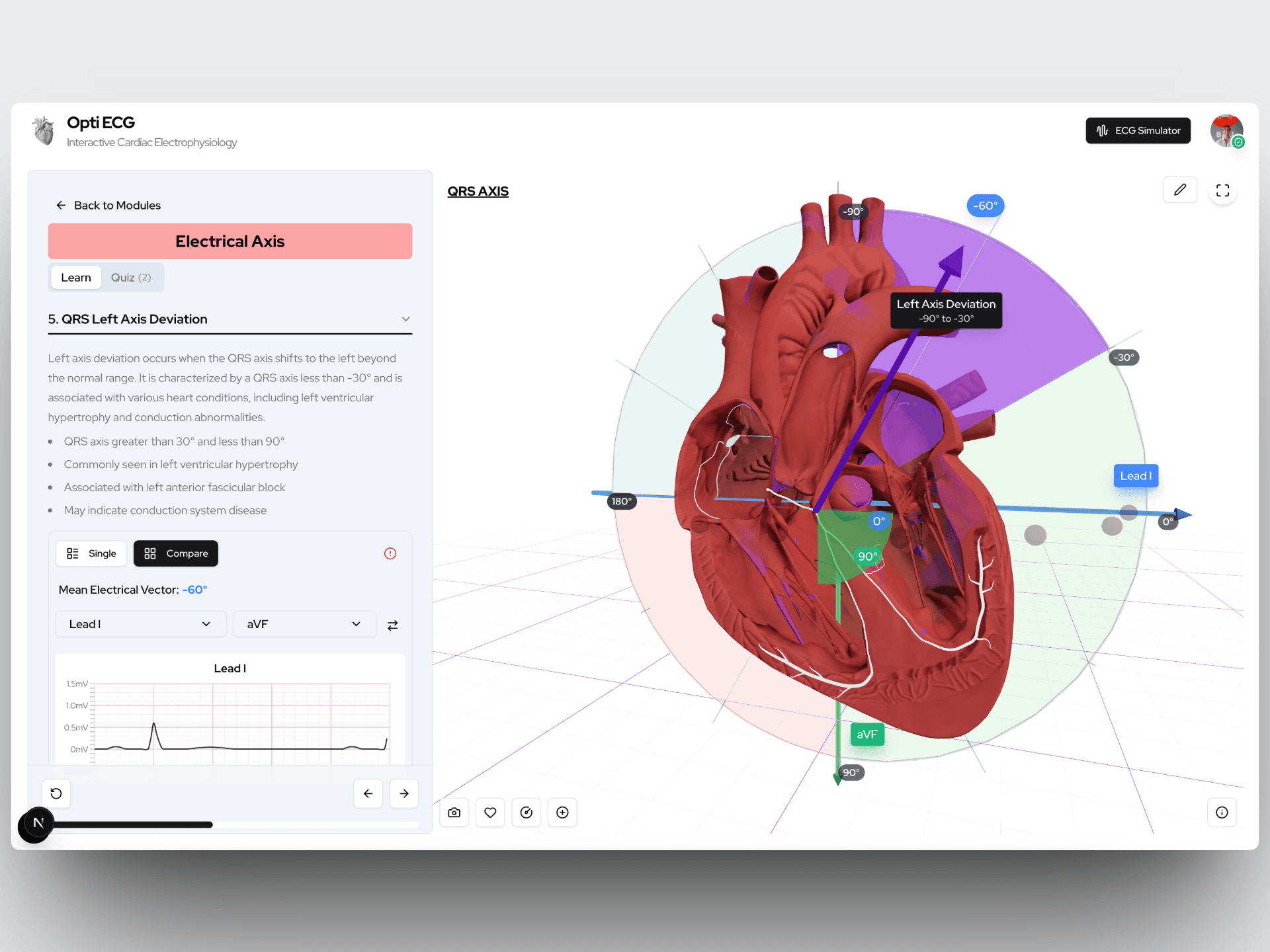
See Feline ECG Overview in 3D
Explore ECG rhythms interactively with our simulator and 3D heart visualization synced beat-for-beat. See how electrical activity produces every wave on the tracing.
Related Topics
How helpful was this page?