Also known as: Sinus Tachy
ECG Characteristics
| Heart Rate | > 100 bpm (human), > 160 bpm (canine) |
| Rhythm | Regular |
| P Wave | Normal morphology; may be difficult to distinguish from preceding T wave at high rates |
| PR Interval | 0.12–0.20 seconds (may shorten slightly at fast rates) |
| QRS Duration | < 0.12 seconds |
Mechanism
The SA node fires at an accelerated rate due to increased sympathetic tone or decreased vagal tone.
Key Features on ECG
- Regular rhythm with rate above normal limits
- P waves present but may merge with preceding T waves at fast rates
- Normal QRS complex
- Gradual onset and offset (unlike SVT)
Causes
- Exercise or physical exertion
- Pain, anxiety, or stress
- Fever or infection
- Anemia or hypovolemia
- Hyperthyroidism
- Stimulant use (caffeine, amphetamines)
- Heart failure (compensatory)
- Pulmonary embolism
Clinical Significance
Sinus tachycardia is almost always a response to an underlying condition rather than a primary arrhythmia. Treatment targets the underlying cause, not the rhythm itself.
Frequently Asked Questions
How do you differentiate sinus tachycardia from SVT?
Sinus tachycardia has a gradual onset and offset, visible P waves (though they may be partially hidden in the T wave), and the rate typically stays below 150 bpm at rest. SVT has an abrupt onset/offset, rate is usually 150–250 bpm, and P waves are often absent or retrograde.
Should sinus tachycardia be treated directly?
Sinus tachycardia is a physiological response, not a primary arrhythmia. Treatment should address the underlying cause (fever, pain, dehydration, anemia, etc.) rather than attempting to slow the rate directly, as doing so may worsen the patient's condition.
What heart rate distinguishes sinus tachycardia in dogs vs humans?
In humans, sinus tachycardia is defined as a sinus rhythm above 100 bpm. In dogs, the threshold varies by breed size: above 160 bpm for large breeds and above 180 bpm for small breeds are generally considered tachycardic.
See Sinus Tachycardia in 3D
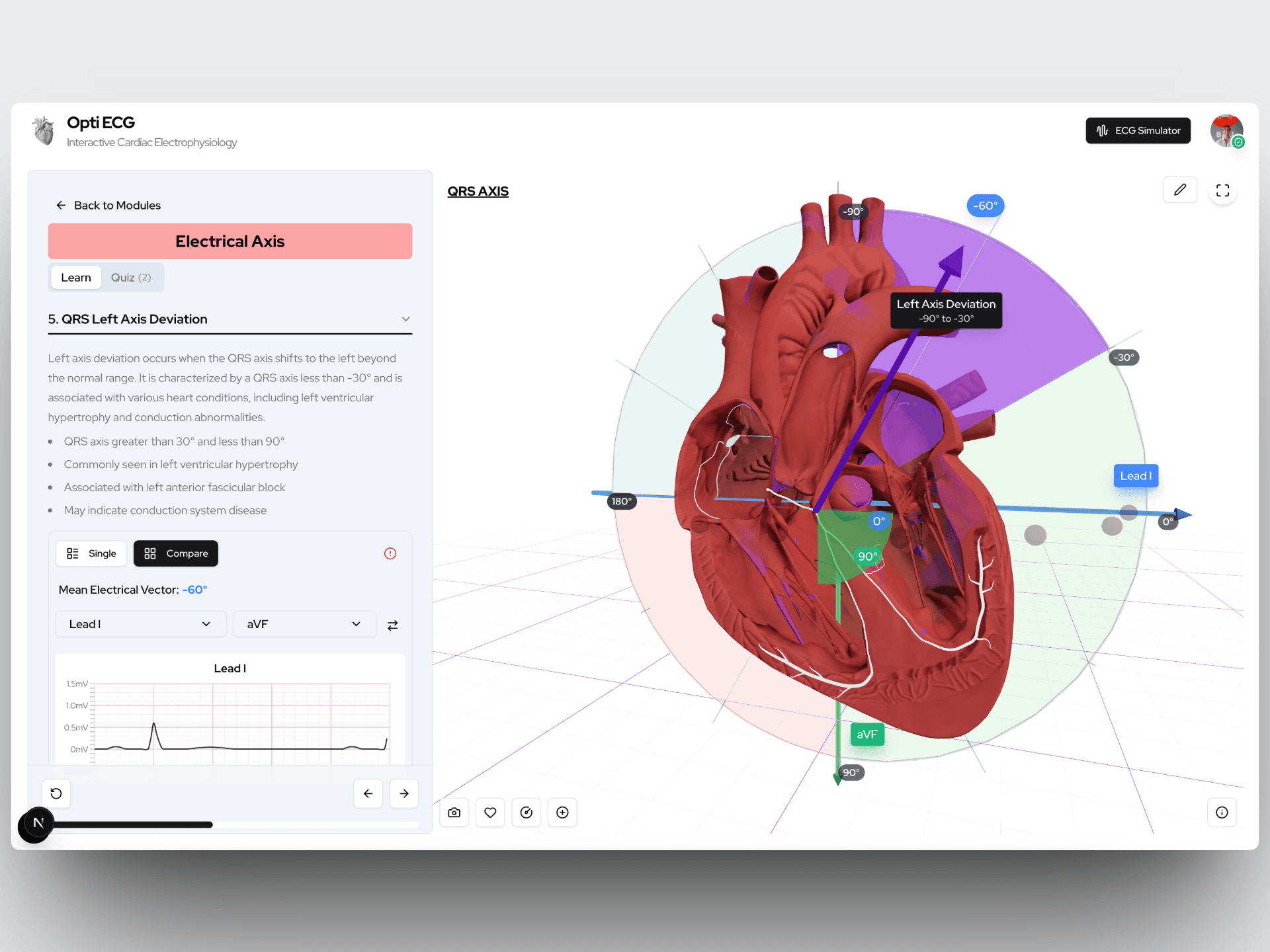
Watch Sinus Tachycardia unfold on a beating 3D heart synced to the ECG. Scrub the timeline, highlight each lead, and see exactly how the rhythm produces the tracing.
Related Topics
How helpful was this page?