Also known as: PVCs, VPCs, Premature Ventricular Contractions, Ventricular Ectopics
ECG Characteristics
| Heart Rate | Underlying rate varies; PVCs interrupt regular rhythm |
| Rhythm | Irregular (underlying rhythm interrupted by wide early beats) |
| P Wave | No P wave preceding the PVC; retrograde P waves may occasionally follow the QRS |
| PR Interval | Not applicable for the PVC itself |
| QRS Duration | > 0.12 seconds; wide and bizarre morphology |
Mechanism
An ectopic ventricular focus depolarizes before the next expected sinus impulse. The impulse spreads via myocyte-to-myocyte conduction rather than the normal His-Purkinje system, producing a wide QRS.
Key Features on ECG
- Wide, bizarre QRS complex (> 0.12s)
- No preceding P wave
- Compensatory pause (full sinus cycle maintained)
- T wave deflection opposite to QRS direction (discordant)
- May appear as unifocal (same morphology) or multifocal (varying morphology)
Causes
- Caffeine, alcohol, or stimulant use
- Electrolyte imbalances (hypokalemia, hypomagnesemia)
- Myocardial ischemia or infarction
- Cardiomyopathy
- Digitalis toxicity
- Often idiopathic in structurally normal hearts
Clinical Significance
Isolated PVCs are common and usually benign in structurally normal hearts. Frequent PVCs (> 10–15% of all beats) can cause PVC-induced cardiomyopathy. Complex patterns (couplets, runs, R-on-T phenomenon) warrant further evaluation.
Frequently Asked Questions
When are PVCs considered dangerous?
PVCs are concerning when they occur frequently (> 10,000/day or > 10% burden), in couplets or runs, with R-on-T timing, or in patients with structural heart disease. These patterns may trigger ventricular tachycardia or cause PVC-induced cardiomyopathy from the dyssynchrony of ventricular activation.
What is a compensatory pause after a PVC?
A compensatory pause is the longer-than-normal interval following a PVC. It occurs because the PVC does not reset the SA node — the next sinus impulse arrives on schedule but finds the ventricles still refractory, so the next conducted beat occurs two sinus cycles after the previous normal beat.
What causes PVCs in dogs?
In dogs, PVCs are commonly associated with myocardial disease (dilated cardiomyopathy, especially in Boxers and Dobermans), gastric dilatation-volvulus, splenic disease, electrolyte imbalances, or trauma. Some breeds have hereditary ventricular arrhythmias (Boxer arrhythmogenic right ventricular cardiomyopathy).
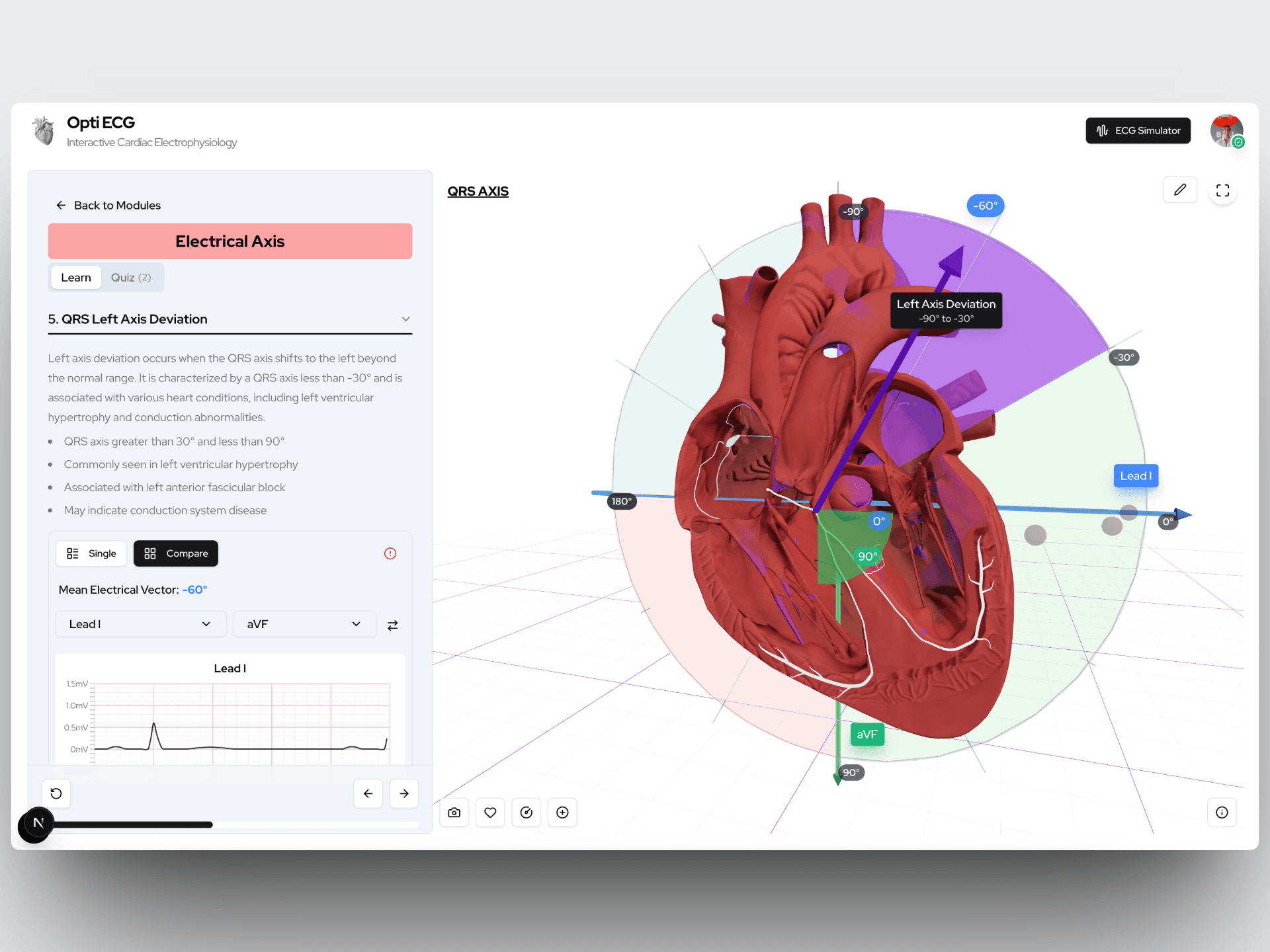
See Premature Ventricular Complexes in 3D
Explore ECG rhythms interactively with our simulator and 3D heart visualization synced beat-for-beat. See how electrical activity produces every wave on the tracing.
Related Topics
How helpful was this page?