Also known as: VT, V-Tach, VTach
ECG Characteristics
| Heart Rate | 100–250 bpm |
| Rhythm | Usually regular (monomorphic) or slightly irregular (polymorphic) |
| P Wave | P waves present but dissociated from QRS (AV dissociation); often not visible |
| PR Interval | Not applicable (AV dissociation) |
| QRS Duration | > 0.12 seconds; wide, bizarre morphology |
Mechanism
Rapid repetitive firing from a ventricular ectopic focus or re-entrant circuit within the ventricular myocardium. The impulse spreads through myocardium rather than the normal conduction system.
Key Features on ECG
- Wide QRS complexes (> 0.12s) at rate ≥ 100 bpm
- AV dissociation (P waves march through independently)
- Fusion and capture beats (diagnostic when present)
- Concordance — all precordial QRS deflections in same direction
- Monomorphic (uniform QRS) or polymorphic (varying QRS) morphology
Causes
- Myocardial ischemia or prior infarction (scar-related reentry)
- Cardiomyopathy (dilated, hypertrophic, arrhythmogenic)
- Electrolyte abnormalities (hypokalemia, hypomagnesemia)
- QT prolongation (drug-induced or congenital)
- Digitalis toxicity
Clinical Significance
VT is a potentially life-threatening arrhythmia. Sustained VT (> 30 seconds or hemodynamically unstable) requires immediate intervention. It may degenerate into ventricular fibrillation and cardiac arrest. Patients with structural heart disease and VT often require ICD implantation.
Frequently Asked Questions
What is the difference between monomorphic and polymorphic VT?
Monomorphic VT has a uniform, consistent QRS morphology beat-to-beat, typically arising from a single re-entrant circuit (often a myocardial scar). Polymorphic VT has a constantly changing QRS morphology, suggesting multiple foci or a shifting re-entrant circuit. Torsades de Pointes is a specific form of polymorphic VT associated with QT prolongation.
How do you distinguish VT from SVT with aberrancy?
Several criteria favor VT: AV dissociation, fusion/capture beats, very wide QRS (> 0.16s), concordance in precordial leads, and specific morphological criteria (Brugada criteria). Age > 35 and prior MI strongly favor VT. When in doubt, treat as VT — it is safer to assume the worst.
Is ventricular tachycardia common in dogs?
VT is a significant arrhythmia in dogs, particularly in Boxers (arrhythmogenic right ventricular cardiomyopathy), Doberman Pinschers (dilated cardiomyopathy), and German Shepherds (inherited ventricular arrhythmias). It is also seen with gastric dilatation-volvulus, splenic masses, and traumatic myocarditis.
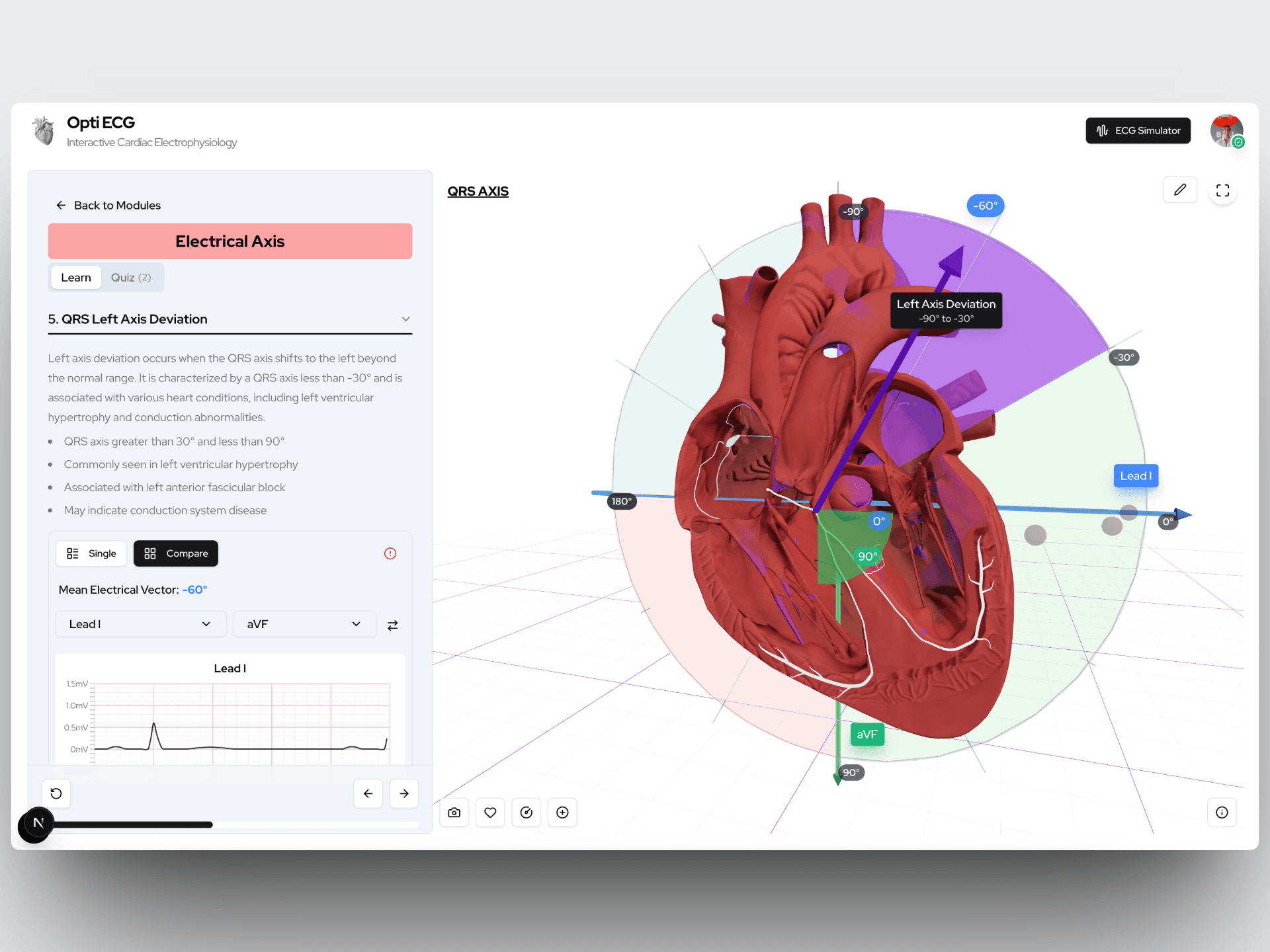
See Ventricular Tachycardia in 3D
Explore ECG rhythms interactively with our simulator and 3D heart visualization synced beat-for-beat. See how electrical activity produces every wave on the tracing.
Related Topics
How helpful was this page?