Also known as: VFib, VF, V-Fib
ECG Characteristics
| Heart Rate | No measurable rate; chaotic electrical activity |
| Rhythm | Completely irregular and chaotic |
| P Wave | Absent; no organized atrial or ventricular activity |
| PR Interval | Not applicable |
| QRS Duration | Not applicable; no discernible QRS complexes |
Mechanism
Multiple chaotic re-entrant wavelets propagate through the ventricular myocardium. No coordinated contraction occurs, resulting in complete loss of cardiac output.
Key Features on ECG
- Chaotic, irregular waveform with no identifiable P waves, QRS complexes, or T waves
- Coarse VFib: higher amplitude undulations (more recent onset, better prognosis)
- Fine VFib: low amplitude activity (may resemble asystole)
- No organized electrical activity
Causes
- Acute myocardial infarction
- Degeneration from ventricular tachycardia
- Severe electrolyte abnormalities
- Drug toxicity or overdose
- Drowning or electrocution
- Hypothermia (rewarming-related)
- Commotio cordis (blunt chest impact)
Clinical Significance
VFib is immediately life-threatening — death occurs within minutes without intervention. It is the most common initial rhythm in witnessed sudden cardiac arrest. Defibrillation is the definitive treatment; CPR and epinephrine support circulation until defibrillation.
Frequently Asked Questions
Why is defibrillation the only effective treatment for VFib?
Defibrillation delivers a controlled electrical shock that simultaneously depolarizes all myocardial cells, momentarily stopping all electrical activity. This allows the SA node to resume as the dominant pacemaker with an organized rhythm. No medication alone can terminate VFib — drugs support resuscitation but defibrillation is required.
What is the difference between coarse and fine VFib?
Coarse VFib has larger, higher-amplitude waveforms and typically indicates more recent onset with more residual myocardial energy — it responds better to defibrillation. Fine VFib has very low amplitude waveforms approaching a flat line and indicates prolonged VFib with depleted energy stores — it often requires CPR and epinephrine before defibrillation will succeed.
How quickly must VFib be treated?
Survival decreases by approximately 7–10% for every minute of untreated VFib. With bystander CPR and early defibrillation (within 3–5 minutes), survival rates of 50–70% are achievable. Without intervention, irreversible brain injury begins within 4–6 minutes and death follows rapidly.
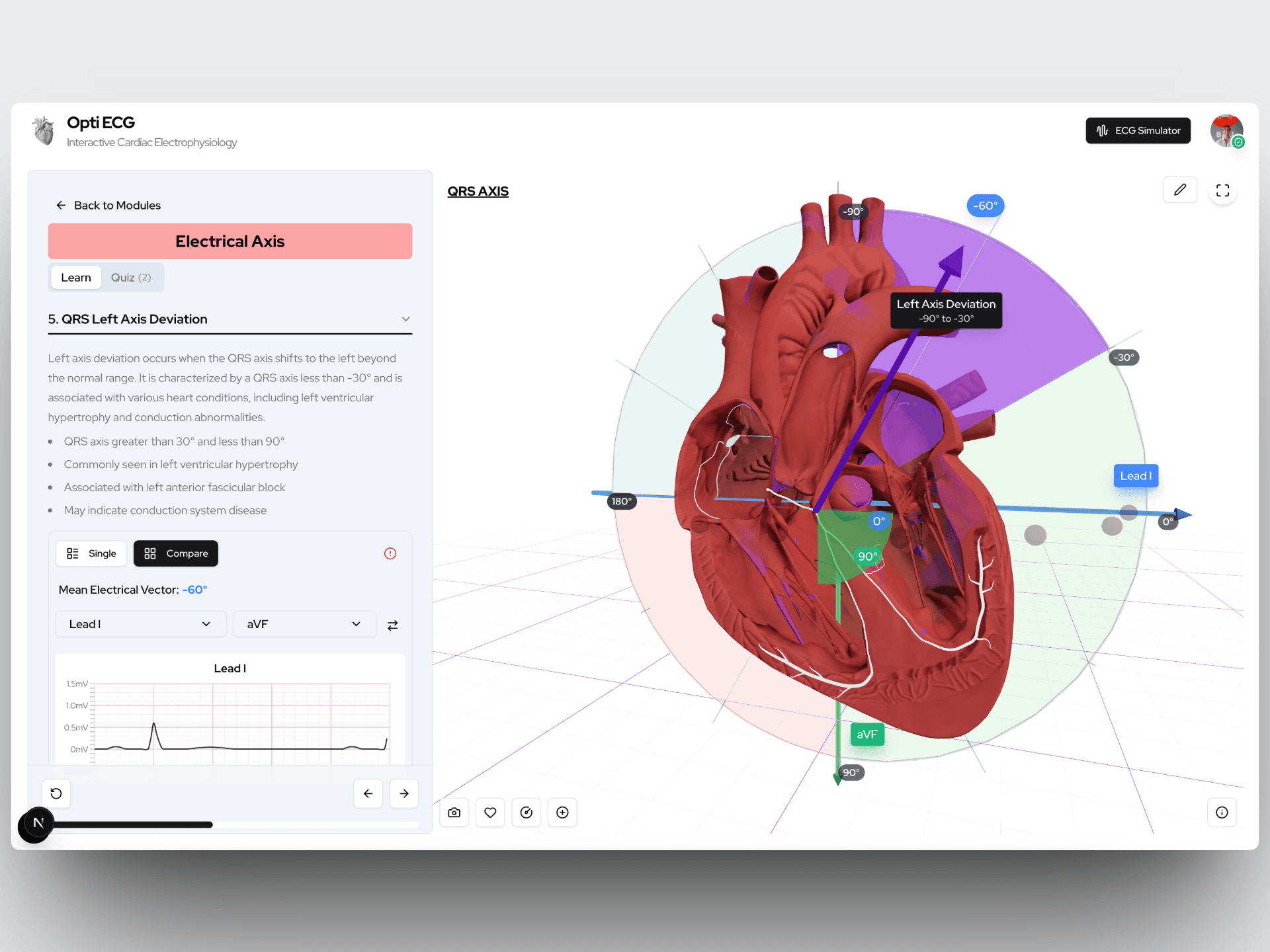
See Ventricular Fibrillation in 3D
Explore ECG rhythms interactively with our simulator and 3D heart visualization synced beat-for-beat. See how electrical activity produces every wave on the tracing.
Related Topics
How helpful was this page?