Also known as: AFL, A-Flutter
ECG Characteristics
| Heart Rate | Atrial rate ~300 bpm; ventricular rate depends on conduction ratio (e.g., 150 bpm with 2:1 block) |
| Rhythm | Regular with fixed conduction ratio; irregular with variable block |
| P Wave | Replaced by flutter (F) waves — regular, sawtooth undulations best seen in leads II, III, aVF, and V1 |
| PR Interval | Not applicable in the traditional sense; F-R interval may be measured |
| QRS Duration | < 0.12 seconds (unless aberrant conduction) |
Mechanism
A single macro-reentrant circuit in the right atrium, typically circling the tricuspid valve annulus. The circuit fires at approximately 300 bpm with the AV node providing a physiological block.
Key Features on ECG
- Sawtooth flutter waves (F waves) at ~300/min
- Best seen in leads II, III, aVF (inverted) and V1 (upright)
- Most commonly 2:1 conduction ratio (ventricular rate ~150 bpm)
- Fixed or variable conduction ratios (2:1, 3:1, 4:1)
- Regular ventricular rate when conduction ratio is fixed
Causes
- Structural heart disease
- Post-cardiac surgery
- COPD or pulmonary disease
- Hyperthyroidism
- Alcohol use
- May degenerate into or coexist with atrial fibrillation
Clinical Significance
Atrial flutter carries similar thromboembolic risk to atrial fibrillation and requires anticoagulation assessment. It is often more difficult to rate-control than AFib. Catheter ablation of the cavotricuspid isthmus is highly effective (>95% success).
Frequently Asked Questions
What does a sawtooth pattern mean on ECG?
The sawtooth pattern refers to the regular, uniform flutter waves (F waves) seen in atrial flutter. These continuous, zigzag deflections are best visualized in the inferior leads (II, III, aVF) and represent the organized atrial circuit firing at approximately 300 bpm.
Why is the ventricular rate often 150 bpm in atrial flutter?
The atrial rate in flutter is typically around 300 bpm. The AV node usually cannot conduct every impulse and defaults to 2:1 conduction, allowing every other atrial impulse through. This results in a ventricular rate of approximately 150 bpm — a regular rate of 150 should always raise suspicion for 2:1 flutter.
How is atrial flutter treated?
Rate control with beta-blockers or calcium channel blockers is used acutely. For definitive treatment, catheter ablation of the cavotricuspid isthmus has a success rate exceeding 95%. Anticoagulation is managed identically to atrial fibrillation based on stroke risk factors.
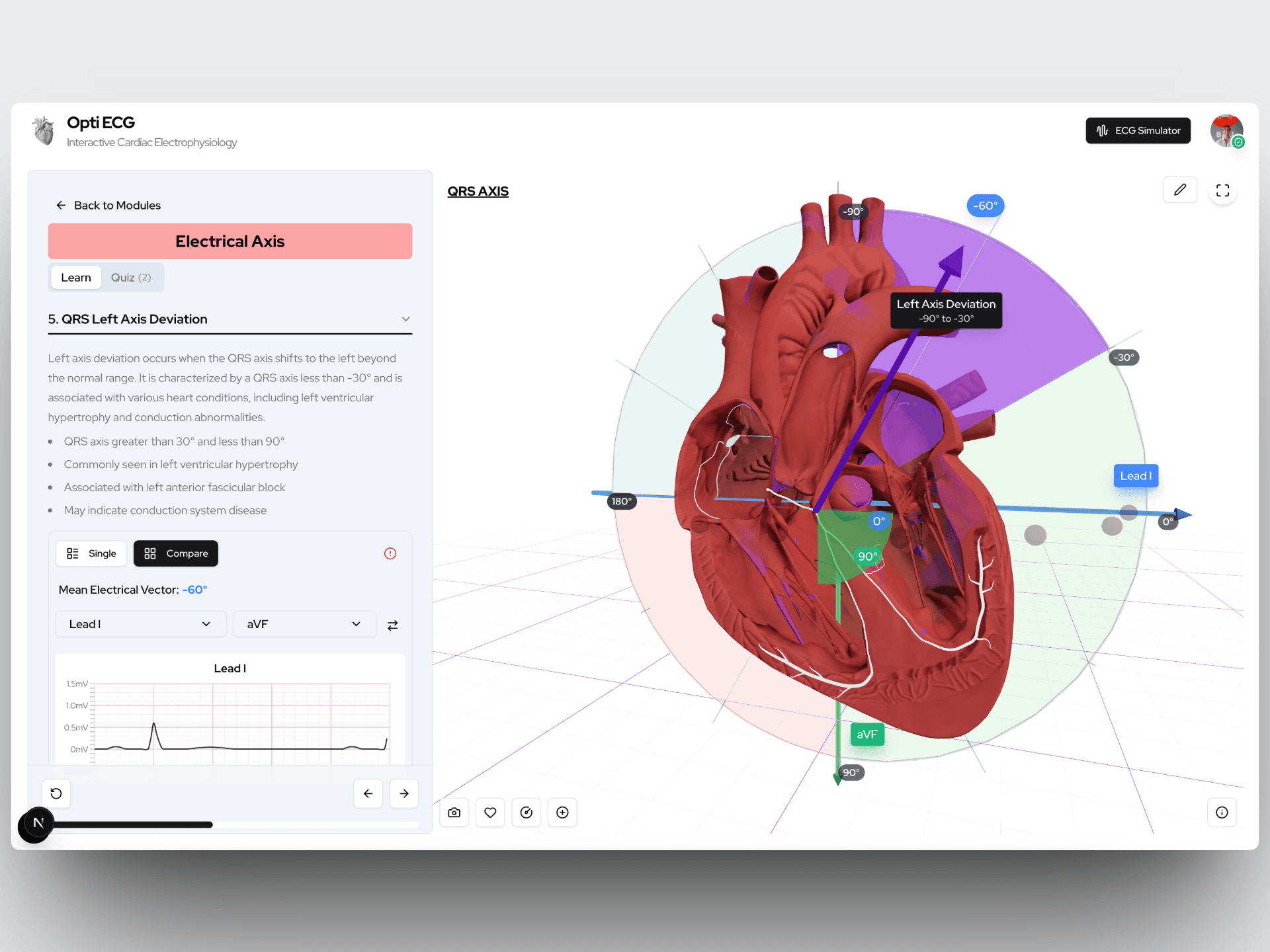
See Atrial Flutter in 3D
Explore ECG rhythms interactively with our simulator and 3D heart visualization synced beat-for-beat. See how electrical activity produces every wave on the tracing.
Related Topics
How helpful was this page?