Also known as: WPW, Ventricular Pre-excitation, WPW Pattern
ECG Characteristics
| Heart Rate | Normal at baseline; SVT episodes 150–250 bpm |
| Rhythm | Regular at baseline; paroxysmal tachycardia episodes |
| P Wave | Normal at baseline |
| PR Interval | < 0.12 seconds (short PR due to pre-excitation) |
| QRS Duration | > 0.10 seconds (widened by delta wave) |
Mechanism
An accessory conduction pathway (Bundle of Kent) connects atria to ventricles, bypassing the AV node's normal delay. Part of the ventricle depolarizes early (pre-excitation) via the accessory pathway while the rest depolarizes normally through the AV node.
Key Features on ECG
- Short PR interval (< 0.12 seconds)
- Delta wave — slurred upstroke of the QRS complex
- Wide QRS complex (> 0.10 seconds) due to fusion
- Secondary ST-T wave changes
- Delta wave polarity varies by pathway location
Causes
- Congenital accessory pathway (Bundle of Kent)
- Usually occurs in structurally normal hearts
- Associated with Ebstein's anomaly
- Family history in some cases
Clinical Significance
The WPW pattern is common (~0.1–0.3% of population) and usually benign. WPW syndrome (pattern + tachyarrhythmias) can be dangerous — particularly pre-excited atrial fibrillation, which may conduct rapidly via the accessory pathway and degenerate into VFib. AV-nodal blockers (adenosine, verapamil) are contraindicated in pre-excited AFib.
Frequently Asked Questions
What is a delta wave?
A delta wave is the slurred, gradual upstroke at the beginning of the QRS complex in WPW. It represents early ventricular depolarization through the accessory pathway before the normal AV node impulse arrives. The rest of the QRS is a fusion between the pre-excited and normally conducted wavefronts.
Why is adenosine dangerous in WPW with atrial fibrillation?
Adenosine blocks AV nodal conduction but does not affect the accessory pathway. In pre-excited AFib, blocking the AV node forces all conduction through the accessory pathway, which can conduct at very rapid rates (>300 bpm). This may cause hemodynamic collapse or degenerate into ventricular fibrillation. Procainamide or electrical cardioversion should be used instead.
How is WPW definitively treated?
Catheter ablation of the accessory pathway is the definitive treatment, with a success rate exceeding 95%. It is recommended for symptomatic patients, high-risk patients (short refractory period of accessory pathway), and those with certain high-risk occupations (pilots, athletes). After successful ablation, the delta wave disappears and the risk of arrhythmia is eliminated.
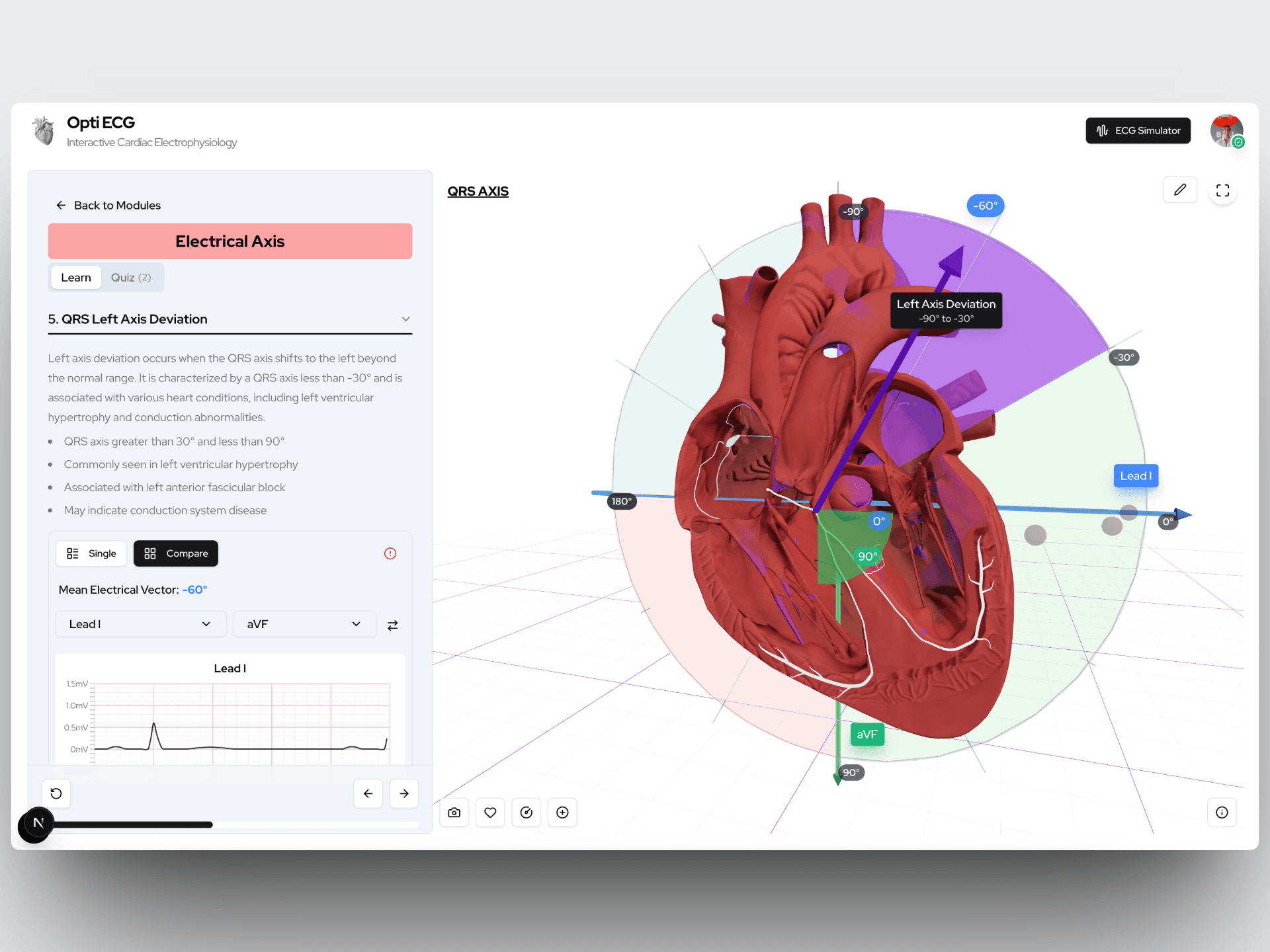
See Wolff-Parkinson-White Syndrome in 3D
Explore ECG rhythms interactively with our simulator and 3D heart visualization synced beat-for-beat. See how electrical activity produces every wave on the tracing.
Related Topics
How helpful was this page?