Also known as: WAP
ECG Characteristics
| Heart Rate | < 100 bpm |
| Rhythm | Irregular |
| P Wave | At least 3 different P wave morphologies, reflecting different atrial foci |
| PR Interval | Variable (changes with pacemaker location) |
| QRS Duration | < 0.12 seconds |
Mechanism
The pacemaker focus gradually shifts between the SA node and ectopic atrial sites, with each focus producing a P wave of different morphology. When the rate exceeds 100 bpm, it is classified as multifocal atrial tachycardia.
Key Features on ECG
- At least 3 different P wave morphologies in the same lead
- Variable P-P intervals
- Variable PR intervals
- Rate < 100 bpm
- Narrow QRS complex
Causes
- Increased vagal tone
- Normal variant (especially in young, athletic individuals)
- COPD or pulmonary disease
- Digoxin effect
Clinical Significance
WAP is usually a benign rhythm and does not require treatment. It is important to distinguish it from multifocal atrial tachycardia (rate > 100 bpm), which is associated with more significant pulmonary disease.
Frequently Asked Questions
How does WAP differ from multifocal atrial tachycardia?
The only distinguishing criterion is heart rate. WAP has a rate below 100 bpm and is usually benign. MAT has a rate above 100 bpm and is typically associated with severe pulmonary disease, hypoxia, or theophylline use. Both show at least 3 different P wave morphologies.
Does WAP require treatment?
No, WAP is a benign rhythm that does not require treatment. It is often an incidental finding, particularly in young, healthy individuals with high vagal tone. No workup is necessary unless associated with symptoms or other abnormalities.
How many P wave morphologies are needed to diagnose WAP?
At least 3 different P wave morphologies must be seen in the same lead to diagnose WAP. These represent at least 3 different pacemaker sites within the atria. Each morphology will have its own associated PR interval.
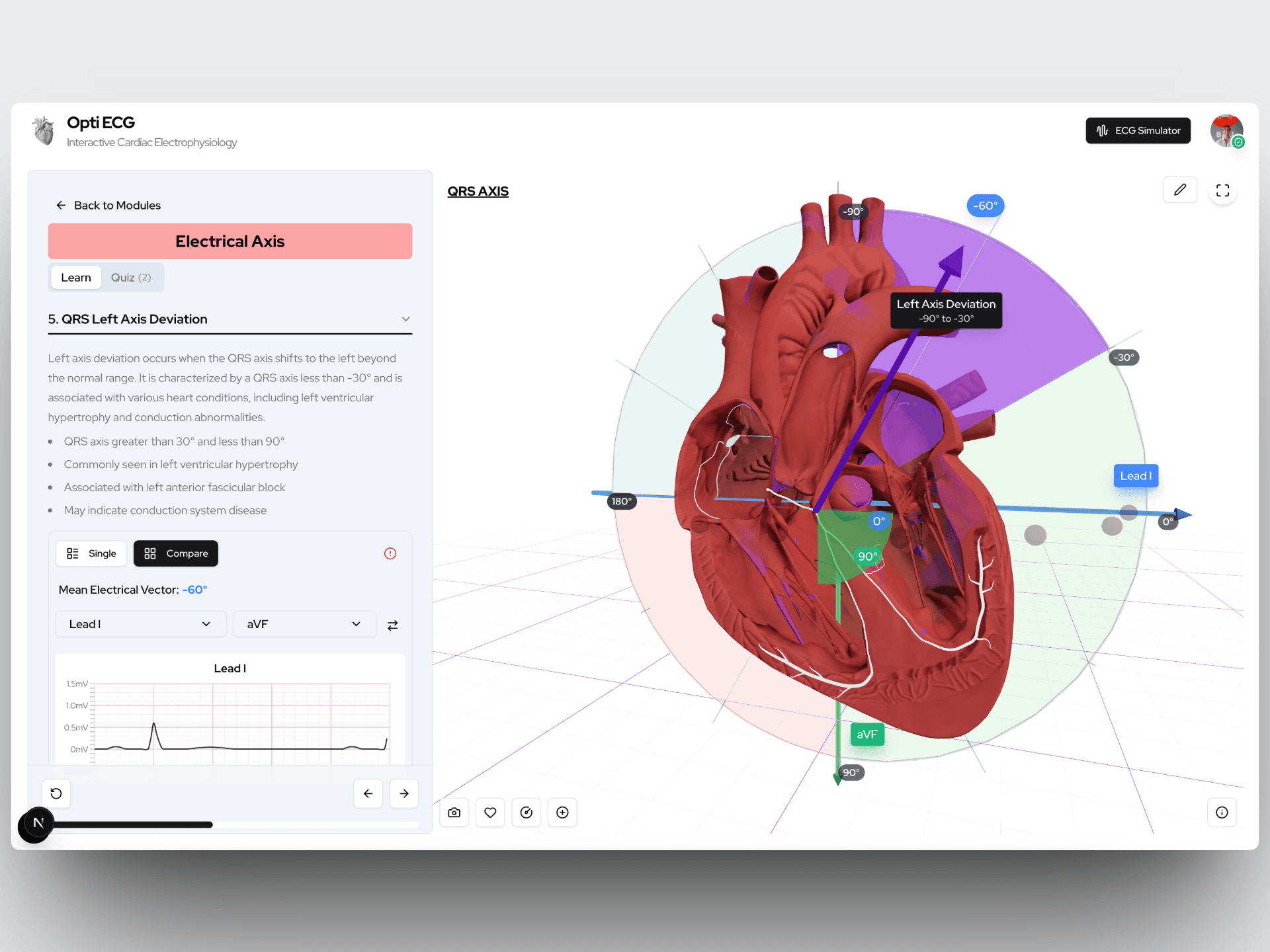
See Wandering Atrial Pacemaker in 3D
Explore ECG rhythms interactively with our simulator and 3D heart visualization synced beat-for-beat. See how electrical activity produces every wave on the tracing.
Related Topics
How helpful was this page?