Also known as: MAT, Chaotic Atrial Tachycardia
ECG Characteristics
| Heart Rate | > 100 bpm (typically 100–150 bpm) |
| Rhythm | Irregularly irregular |
| P Wave | At least 3 different P wave morphologies |
| PR Interval | Variable |
| QRS Duration | < 0.12 seconds |
Mechanism
Multiple atrial foci fire independently at rapid rates. The mechanism involves enhanced automaticity at multiple atrial sites, often triggered by atrial stretch, hypoxia, or electrolyte abnormalities.
Key Features on ECG
- Rate > 100 bpm
- At least 3 different P wave morphologies
- Variable P-P, PR, and R-R intervals
- Irregularly irregular rhythm (can mimic AFib)
- Discrete P waves visible (unlike AFib)
Causes
- Severe COPD or pulmonary disease (most common)
- Acute respiratory failure or hypoxia
- Theophylline or aminophylline use
- Heart failure with pulmonary congestion
- Hypokalemia or hypomagnesemia
Clinical Significance
MAT is associated with severe underlying disease and carries high mortality (primarily from the underlying condition). Treatment focuses on the underlying pulmonary disease, correcting hypoxia, and electrolyte repletion. Cardioversion and most antiarrhythmic drugs are ineffective.
Frequently Asked Questions
How do you distinguish MAT from atrial fibrillation?
Both MAT and AFib are irregularly irregular. The key distinguishing feature is P waves: MAT has discrete, identifiable P waves with at least 3 different morphologies, while AFib has no organized P waves — only chaotic fibrillatory waves. Additionally, MAT P waves have an isoelectric baseline between them, whereas AFib does not.
Why is cardioversion ineffective for MAT?
Cardioversion is ineffective because MAT is not caused by a single re-entrant circuit that can be interrupted by a shock. Instead, it results from enhanced automaticity at multiple atrial foci. Shocking the heart would only briefly interrupt the rhythm before the multiple foci resume firing. Treatment must address the triggers (hypoxia, electrolytes).
What is the best treatment for MAT?
Treatment of the underlying condition (COPD exacerbation, respiratory failure) is the most important intervention. Magnesium repletion (even if serum levels are normal) can be helpful. If rate control is needed, non-dihydropyridine calcium channel blockers (verapamil, diltiazem) are preferred. Avoid beta-blockers in patients with bronchospastic disease.
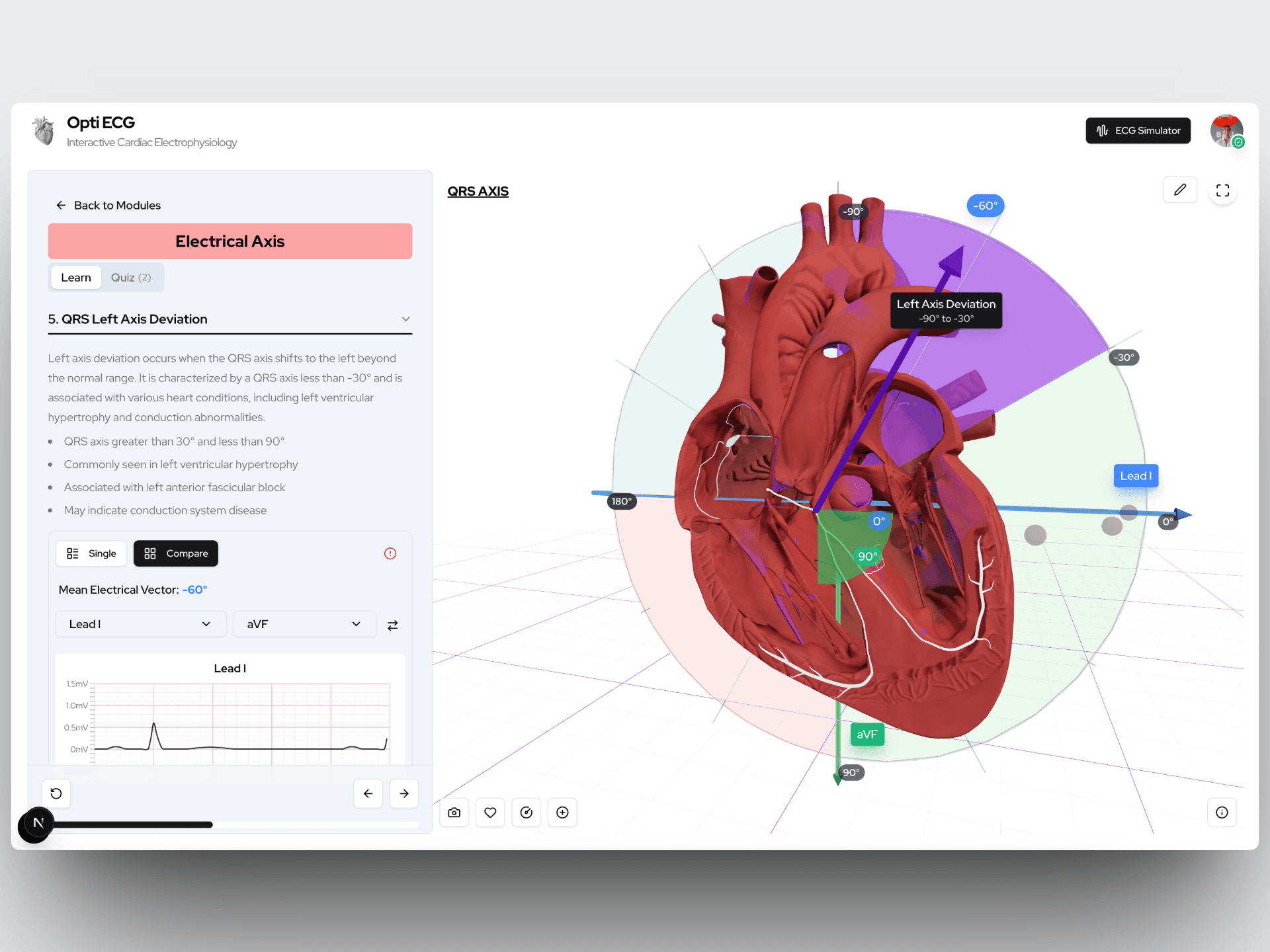
See Multifocal Atrial Tachycardia in 3D
Explore ECG rhythms interactively with our simulator and 3D heart visualization synced beat-for-beat. See how electrical activity produces every wave on the tracing.
Related Topics
How helpful was this page?