Also known as: Flatline, Ventricular Standstill
ECG Characteristics
| Heart Rate | 0 bpm (no cardiac activity) |
| Rhythm | No rhythm — flatline |
| P Wave | Absent (true asystole) or present (P-wave asystole — atrial activity without ventricular response) |
| PR Interval | Not applicable |
| QRS Duration | Not applicable |
Mechanism
Complete absence of ventricular electrical activity. All pacemaker cells have failed or are unable to generate impulses. P-wave asystole indicates the SA node is still functioning but the ventricles are unresponsive (complete infranodal block without escape).
Key Features on ECG
- Flat line — no discernible electrical activity
- Confirm in 2 leads to rule out lead disconnection or fine VFib
- P-wave asystole: visible P waves without QRS complexes
- No organized electrical activity of any kind in true asystole
Causes
- End-stage cardiac arrest (degeneration from VFib or PEA)
- Massive myocardial infarction
- Severe hyperkalemia
- Profound hypothermia
- Prolonged hypoxia
- Complete failure of all pacemaker cells
Clinical Significance
Asystole carries an extremely poor prognosis and is often the terminal rhythm. Treatment includes CPR, epinephrine, and addressing reversible causes (Hs and Ts). Defibrillation is NOT indicated — there is no organized electrical activity to reset. P-wave asystole has a slightly better prognosis and may respond to pacing.
Frequently Asked Questions
Why can't you defibrillate asystole?
Defibrillation works by simultaneously depolarizing all cardiac cells to allow the SA node to resume as the dominant pacemaker. In asystole, there is no electrical activity to reset — the myocardium is already completely depolarized or has no residual electrical energy. Shocking asystole wastes time that should be spent on CPR and epinephrine administration.
What are the Hs and Ts of reversible causes?
The Hs: Hypovolemia, Hypoxia, Hydrogen ion (acidosis), Hyper/hypokalemia, Hypothermia. The Ts: Tension pneumothorax, Tamponade (cardiac), Toxins, Thrombosis (coronary or pulmonary). Identifying and treating reversible causes is essential because asystole will not respond to drugs alone if a reversible cause is not addressed.
What is the difference between asystole and PEA?
Asystole shows no electrical activity on the monitor — a flatline. PEA (Pulseless Electrical Activity) shows organized electrical activity on the monitor but there is no palpable pulse — the heart has electrical activity but is not producing mechanical contraction or adequate cardiac output. Both are non-shockable rhythms treated with CPR and epinephrine.
See Asystole in 3D
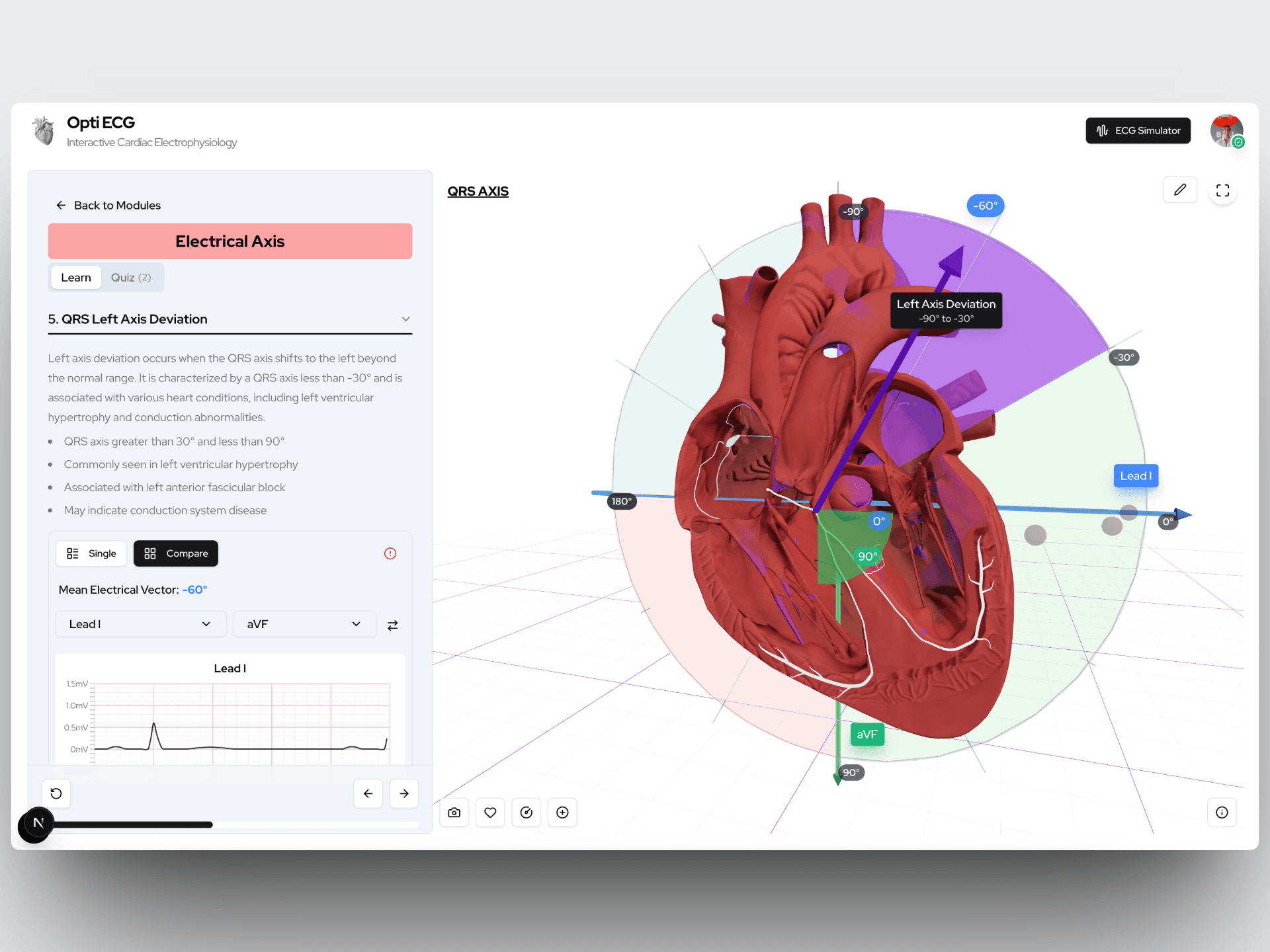
Explore ECG rhythms interactively with our simulator and 3D heart visualization synced beat-for-beat. See how electrical activity produces every wave on the tracing.
Related Topics
How helpful was this page?